FREE SHIPPING on orders over $475
FREE SHIPPING on orders over $475 | No Code Needed
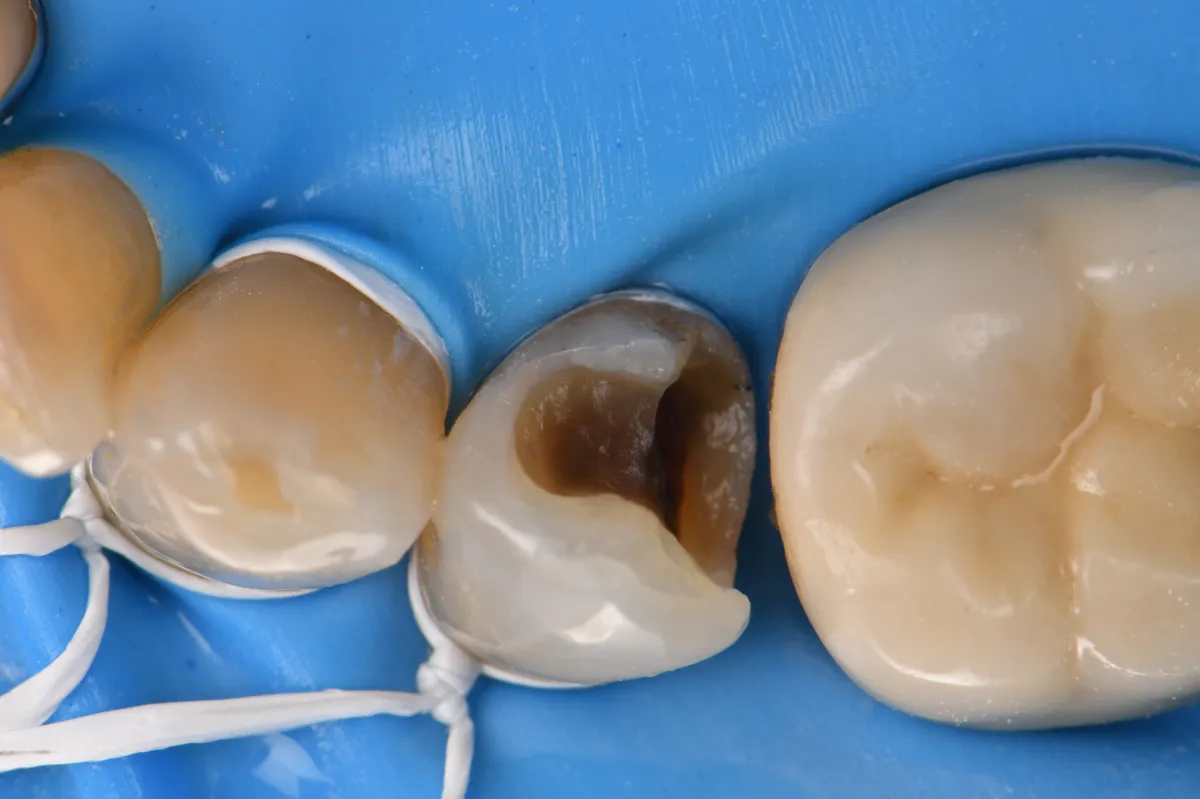
A 71 year old ASA II female with medical history significant for controlled hypertension and hypercholesteremia presented to the practice with a clinical concern of marginal failure and sensitivity with her amalgam restoration on #28DOL.
The patient was anesthetized using carpule of 2% Lignocaine with 1:100,000 epinephrine and the quadrant isolated with a non-latex rubber dam (1. Dermadam, Ultradent Products). The amalgam was removed and any caries excavated (2), leaving a stained, hard dentin base behind. The margins were beveled prior to the tooth being subjected to air particle abrasion (29 micron aluminum oxide, Aquacare). The matrix assembly begins with placement of the metal band (3. Firm Band, Garrison), subsequently secured by the bifid wedge (3. Quad wedge, Garrison Dental Solutions). The custom separating ring is then placed (3. Quad system, Garrison Dental Solutions) and the contact gently burnished. A total etch adhesive approach was
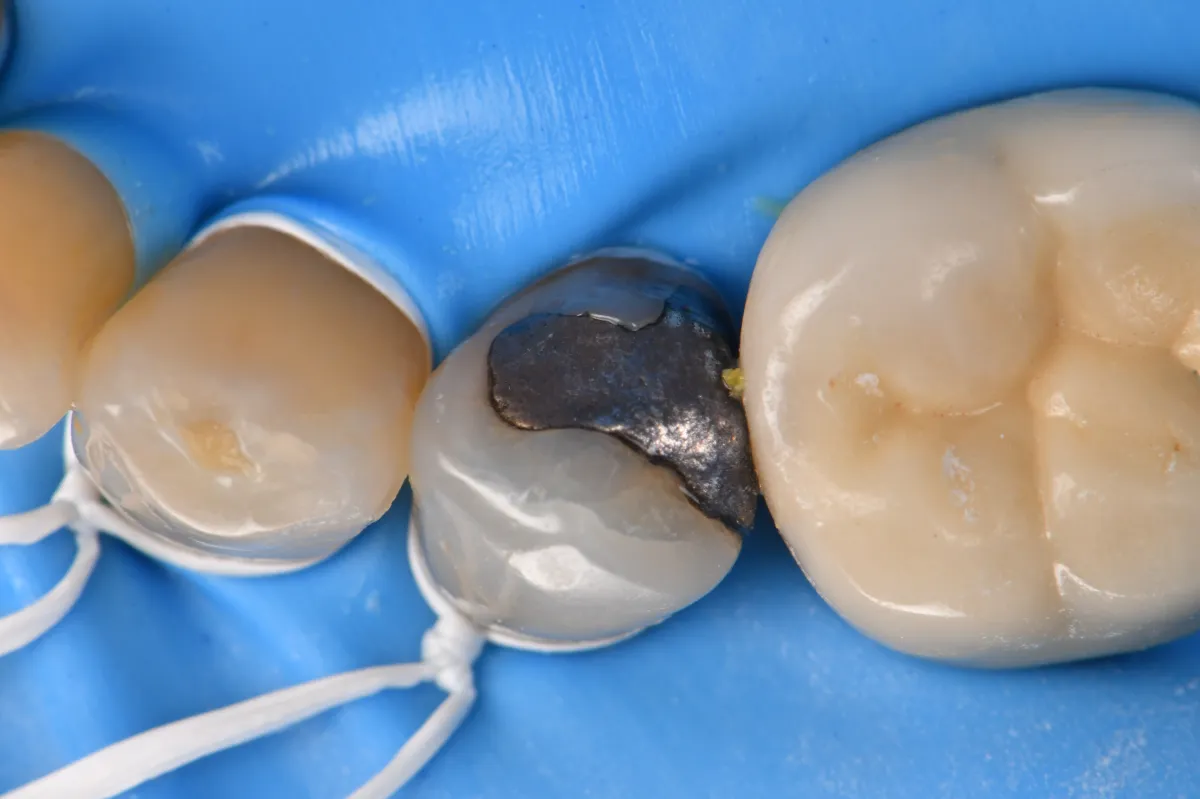
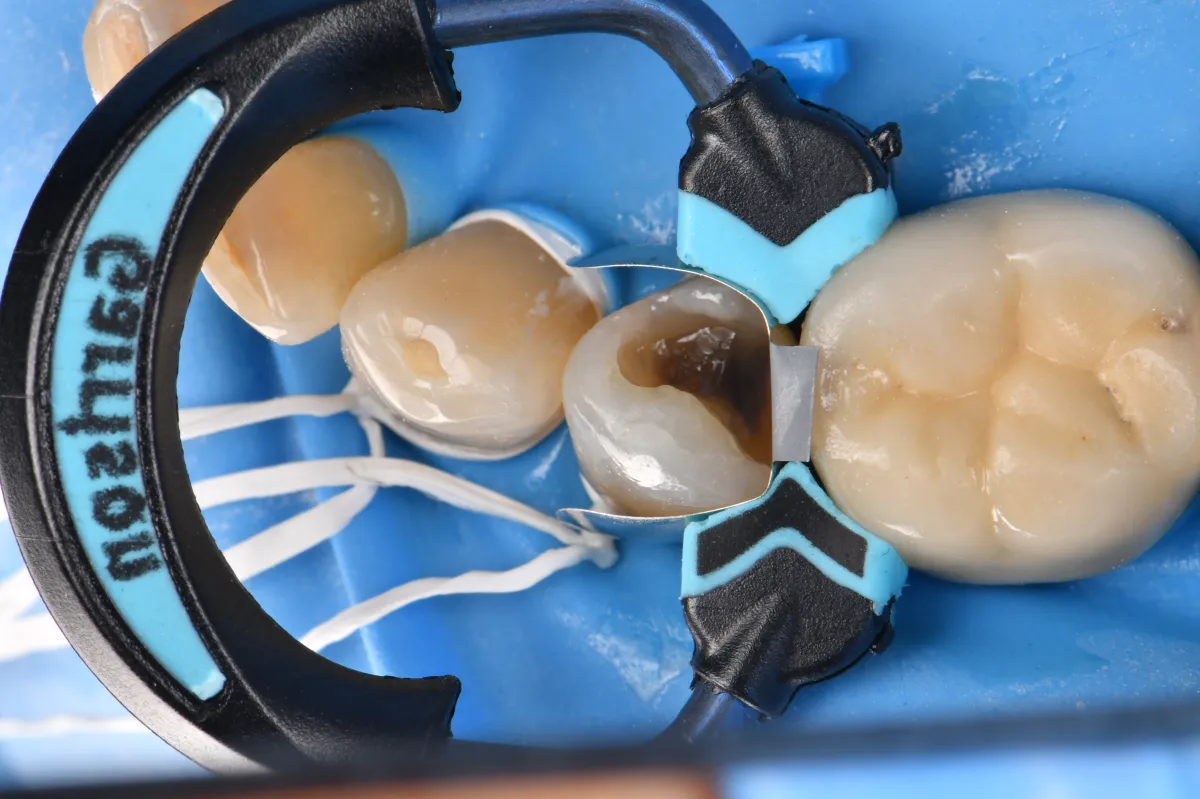
completed using enamel etching with 33% orthophosphoric acid for 10 seconds, dentin etching for 12 seconds, followed by copious water irrigation. After drying, the preparation was rewet using a 2% chlorhexidine solution (Vista) for 30 seconds with a scrubbing action. The tooth was reduced to a moist dentin state using cotton pledgets, and a 5th generation total etch adhesive placed as per manufacturer instructions (Peak Universal Bond, Ultradent Products). The marginal ridge
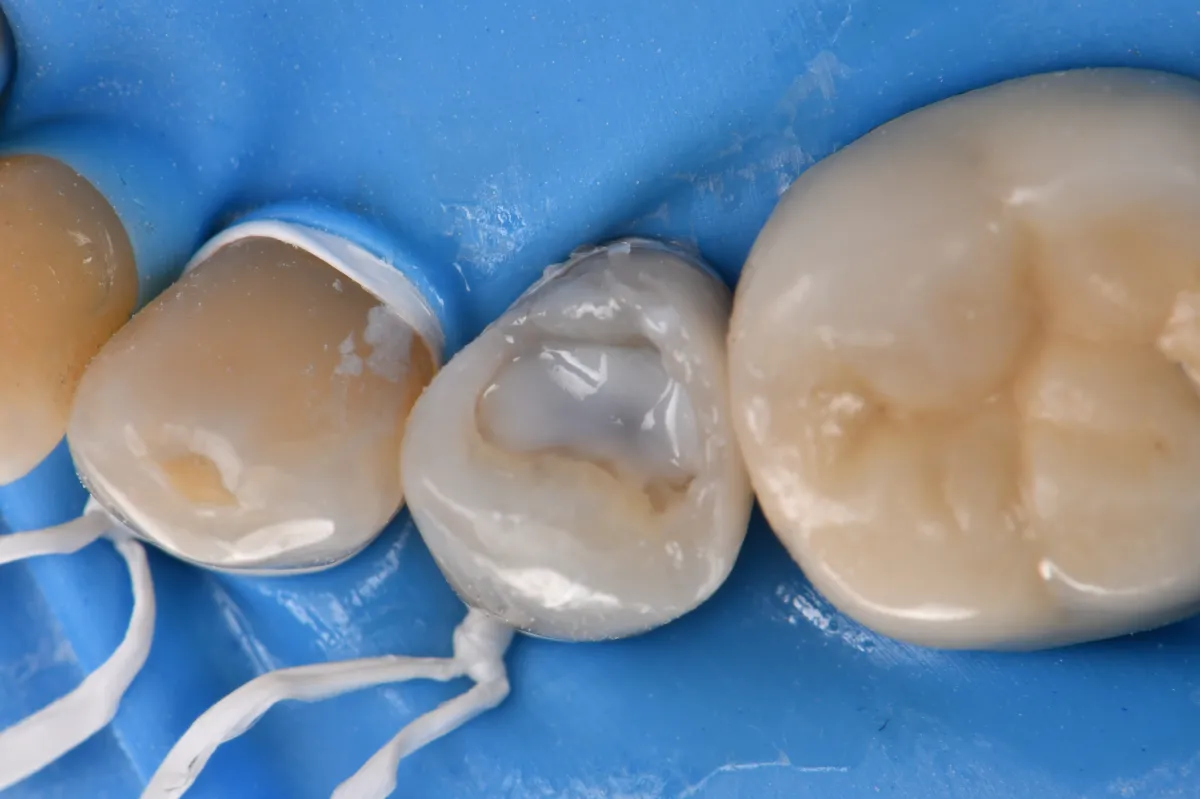
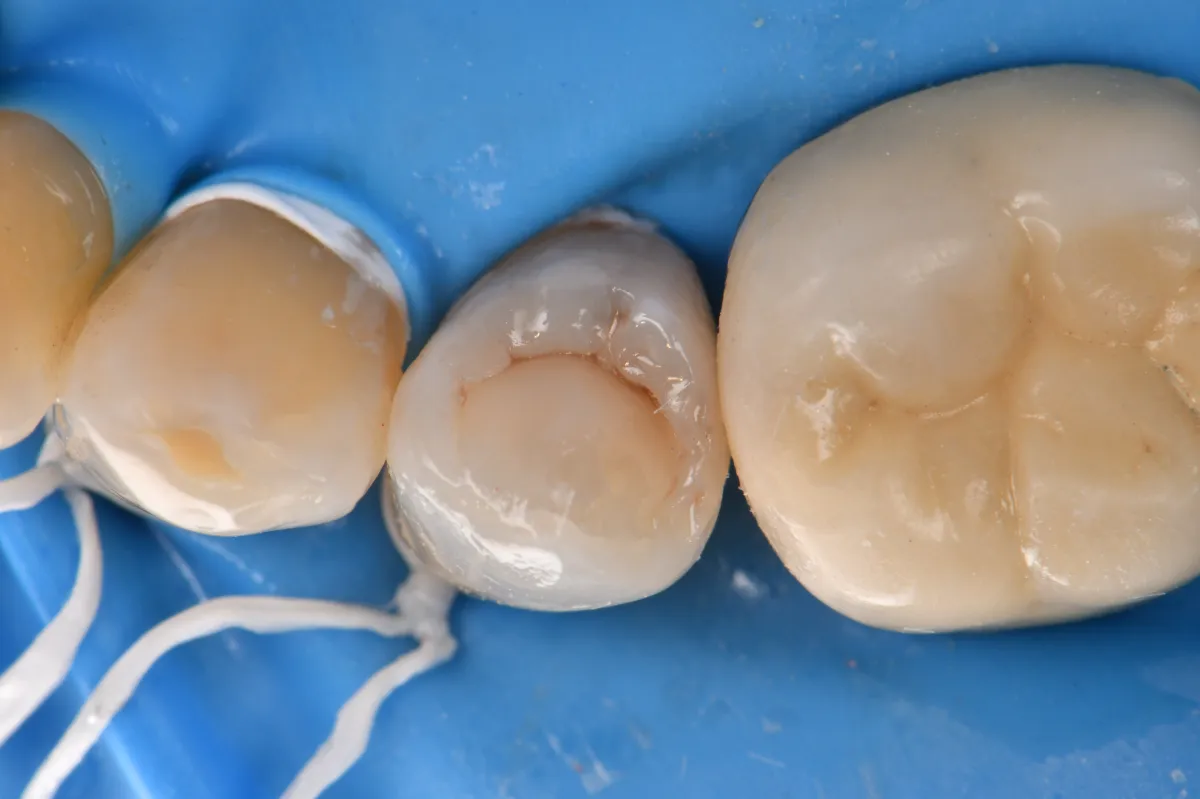
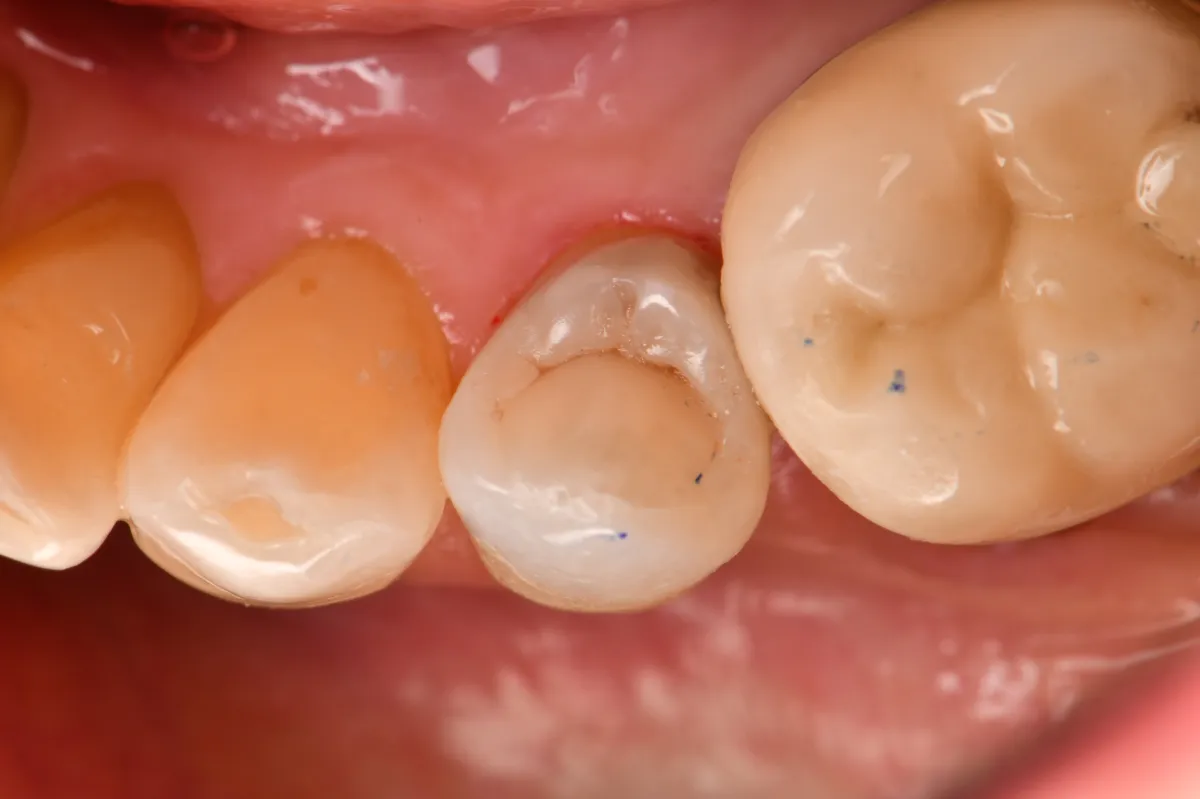
was fashioned using a combination of A3 Clearfil Majesty Flow microlayers in a horizontal fashion (2) (Kuraray Noritake Dental) and Simplishade Dark (Kerr), converting the Class II situation into a Class I lesion (1). The occlusal layering required multiple microlayers of a white opaque flowable (4. XL2, Herculite Ultra flowable, Kerr Dental) prior to occlusal lobe-by-lobe layering using Simplishade Dark (Kerr). The fissures were characterized using a brown tint (5. Final Touch Brown, Voco). The occlusion was adjusted to be conformative, and the restoration polished to high shine. The final result (6) features a restoration with well-integrated functional and esthetic characteristics
It is crucial that when burnishing the matrix band in the assembly that the occlusal aspect is not also overburnished - doing so distorts the built-in proximoaxial contour of the band, eliminating the much-desired occlusal embrasure, which is part of the proximal anatomy, and represents a masticatory sluiceway to allow for the lateral escape of food during the compressive chewing process.
1) Francci C, Loguercio AD, Reis A, Carrilho MR. A novel filling technique for packable composite resin in Class II restorations. J Esthet Restor Dent. 2002;14(3):149-57. doi:
10.1111/j.1708-8240.2002.tb00515.x. PMID: 12132569.
2) Nikolaenko SA, Lohbauer U, Roggendorf M, Petschelt A, Dasch W, Frankenberger R. Influence of c-factor and layering technique on microtensile bond strength to dentin. Dent Mater. 2004 Jul;20(6):579-85..