Restoring ideal proximal anatomy and achieving contact tightness in deep and wide preparations can be challenging. The Strata-G wide prep ring, combined with the appropriate sectional matrix system, offers a practical solution for these clinical scenarios
Introduction
Background
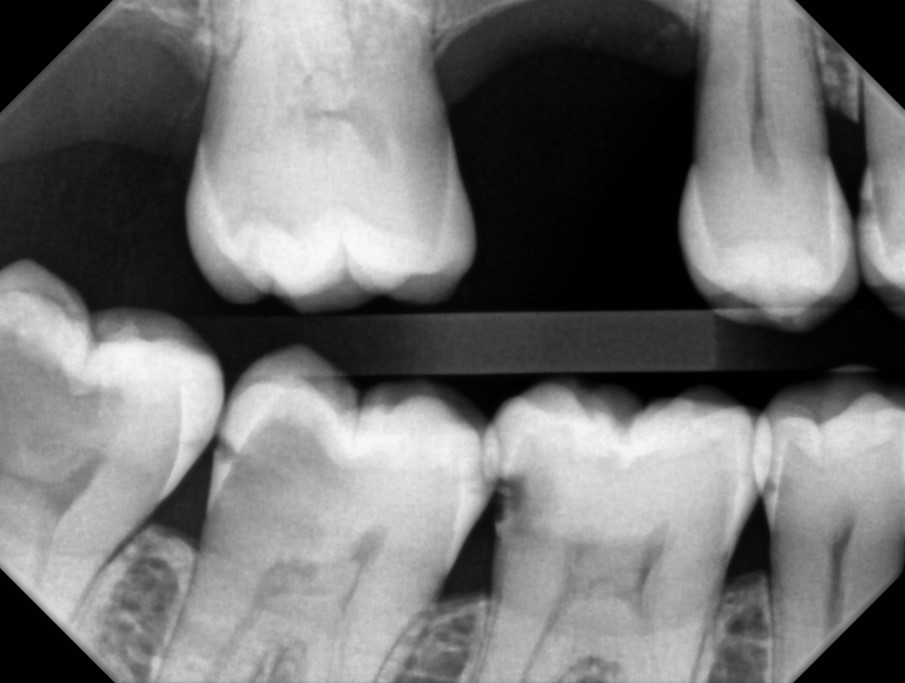
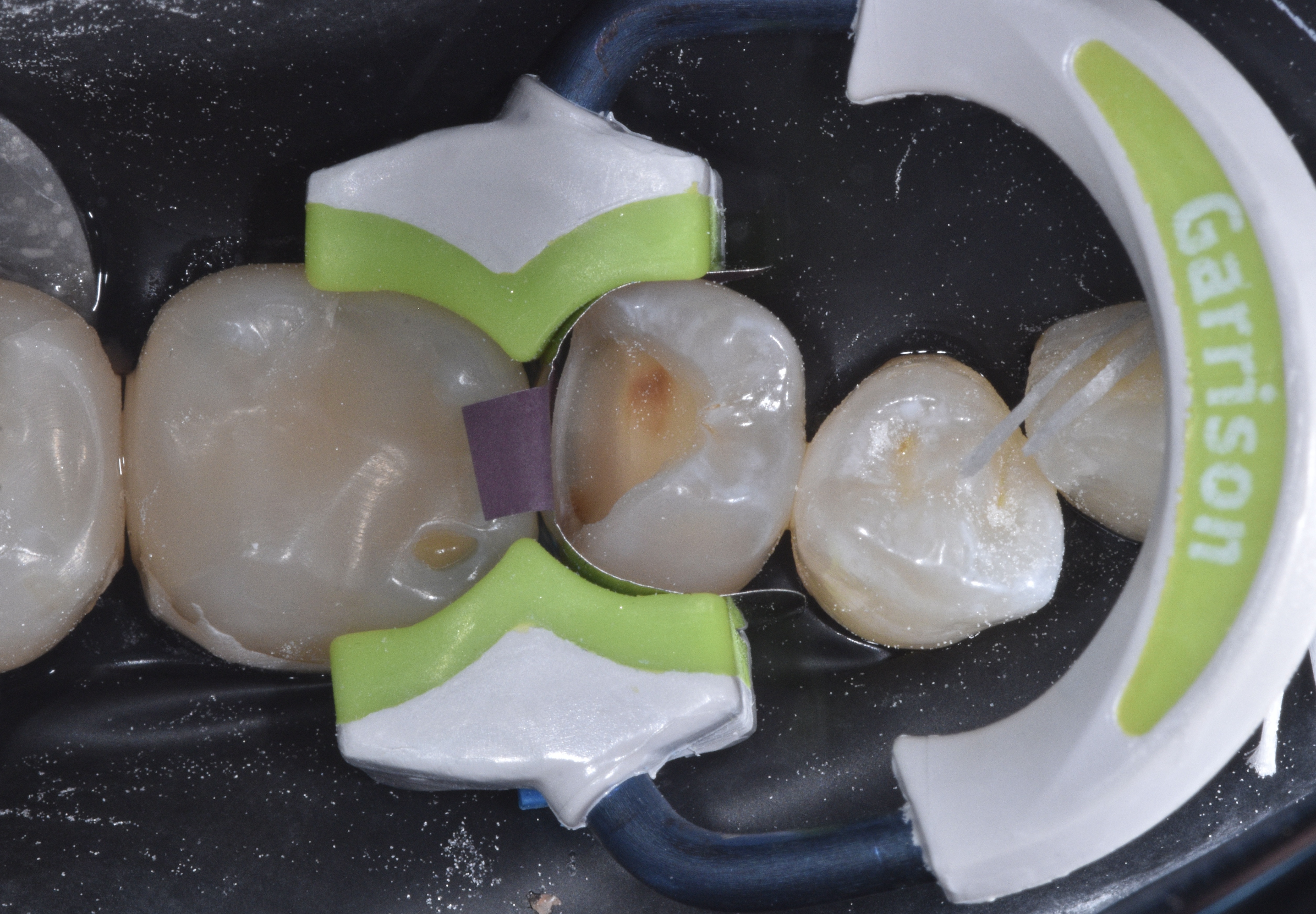
A 38-year-old healthy female presented with a large carious lesion on tooth #29 (DO) (Figure 1). The completed preparation featured a deep and wide proximal box (Figure 2), making the selection of a matrix system crucial for successful restoration.
|
| Figure 1. |
|
| Figure 2. |
Pre-operative Case Analysis
When selecting a matrix system for this clinical situation, it is important to consider:
- The stiffness of the sectional matrix
- The proper wedge size and design
- The correct Garrison ring
The Stiffness of the Sectional Matrix:
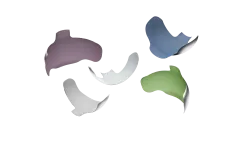
For this case, the Strata-G purple small molar band was chosen for several reasons:
- This band is less stiff than stainless-steel bands, allowing for better adaptation to the preparation walls and gingival floor.
- The 5.5mm height is ideal for deep margins in premolar teeth.
- The band’s thinness helps achieve ideal contact tightness.
The Proper Wedge Size and Design:
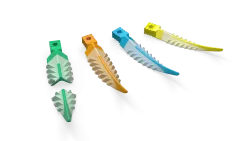
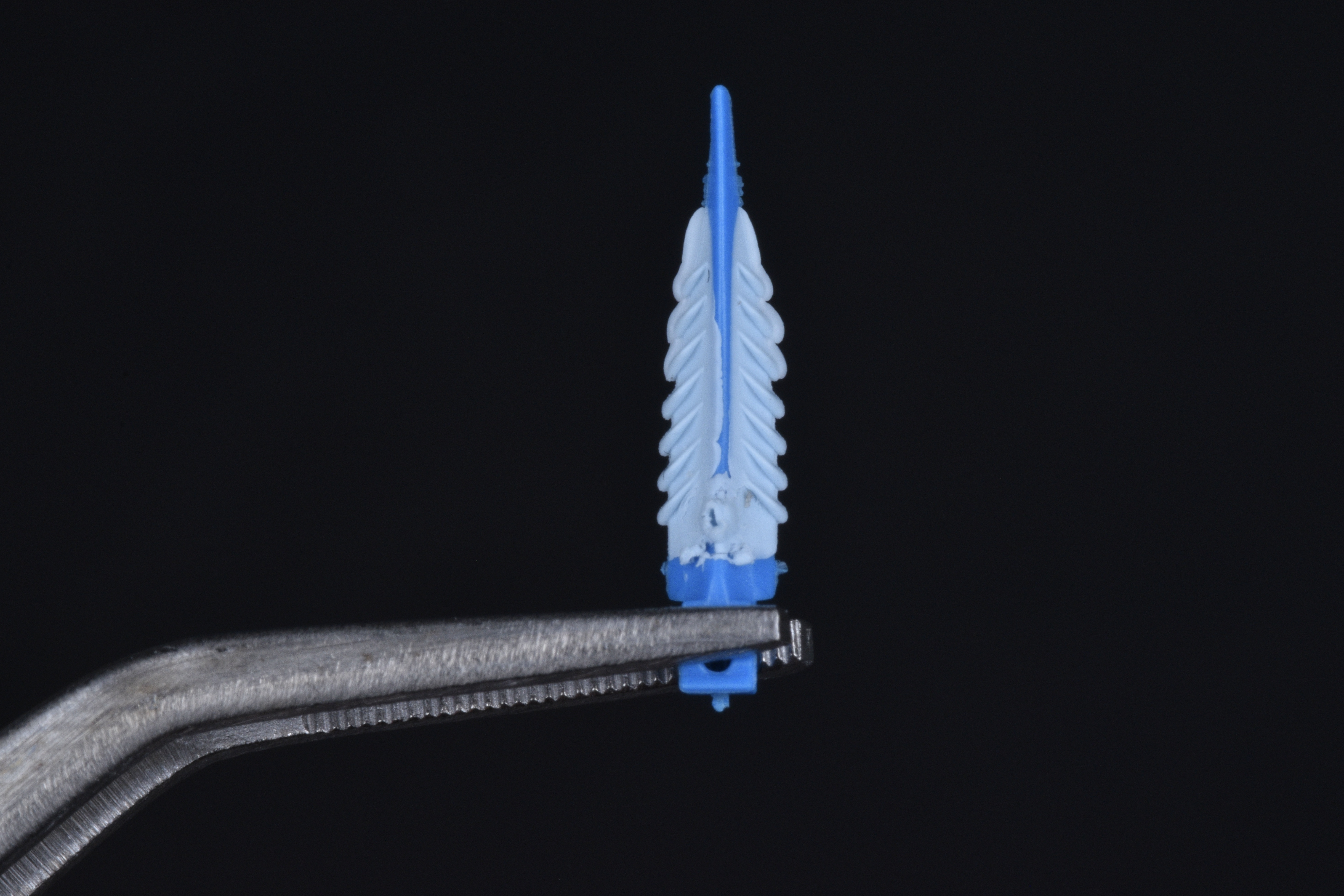
The small (blue) Strata-G wedge (Figure 3) was selected to secure the band without deforming it near the deep margin. This wedge is wide enough (2.99mm at its widest point) to tightly adapt the band against the deep margin. Made from soft material, it prevents damage to the band in areas with minimal tooth structure to wedge against—common in deep margin situations. Deformation in this area can lead to non-anatomical emergence profiles, plaque accumulation, inflammation, and secondary caries.
|
| Figure 3. |
The Correct Garrison Ring
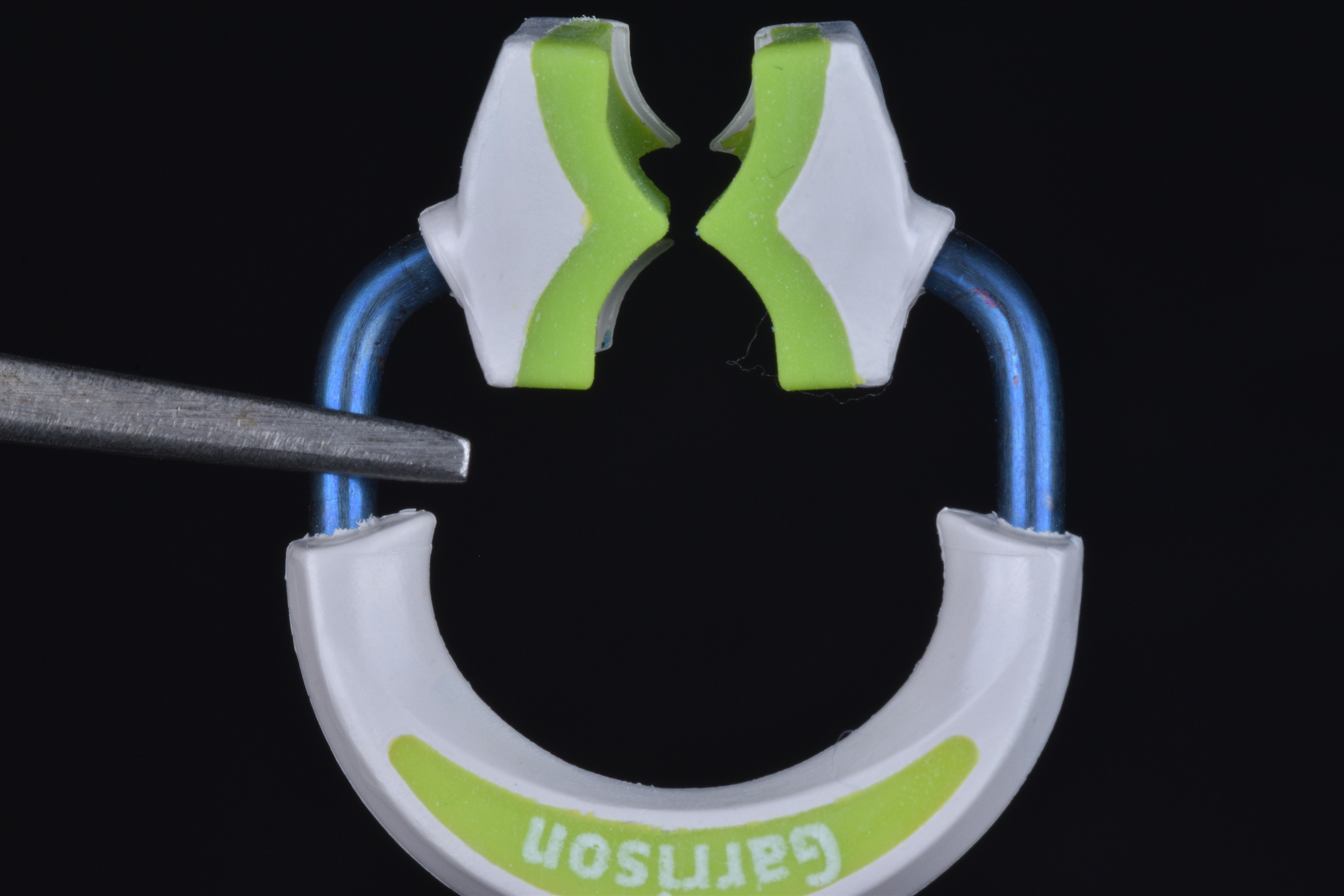
For wide preparations, the Strata-G system from Garrison provides a green ring (Figure 4) with wider silicon pads compared to the short and tall rings. It exerts less interproximal pressure, helping avoid impingement in buccal and lingual embrasure areas. Thus, selecting the correct band and wedge is vital for optimal results.
|
| Figure 4. |
Clinical Procedures
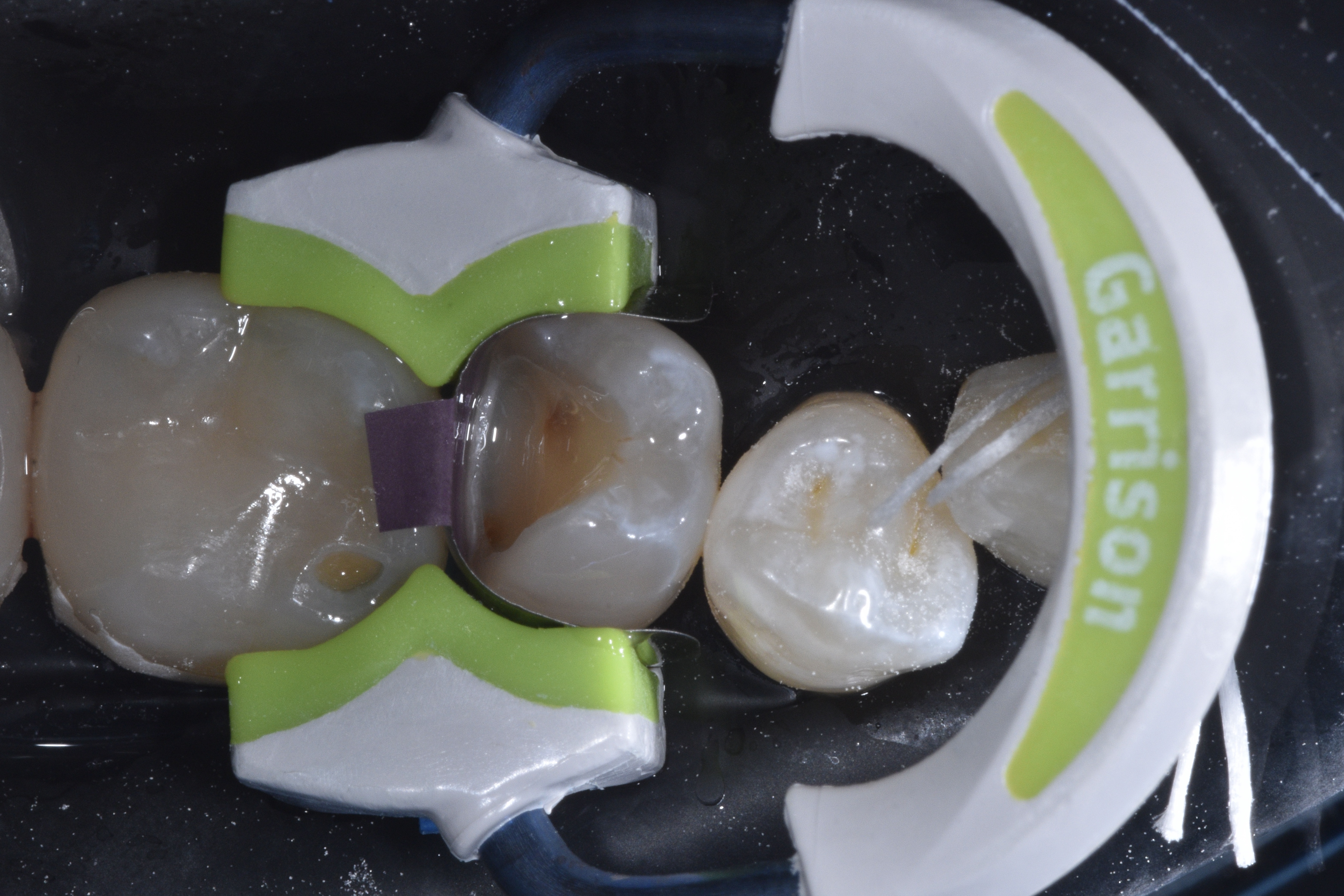
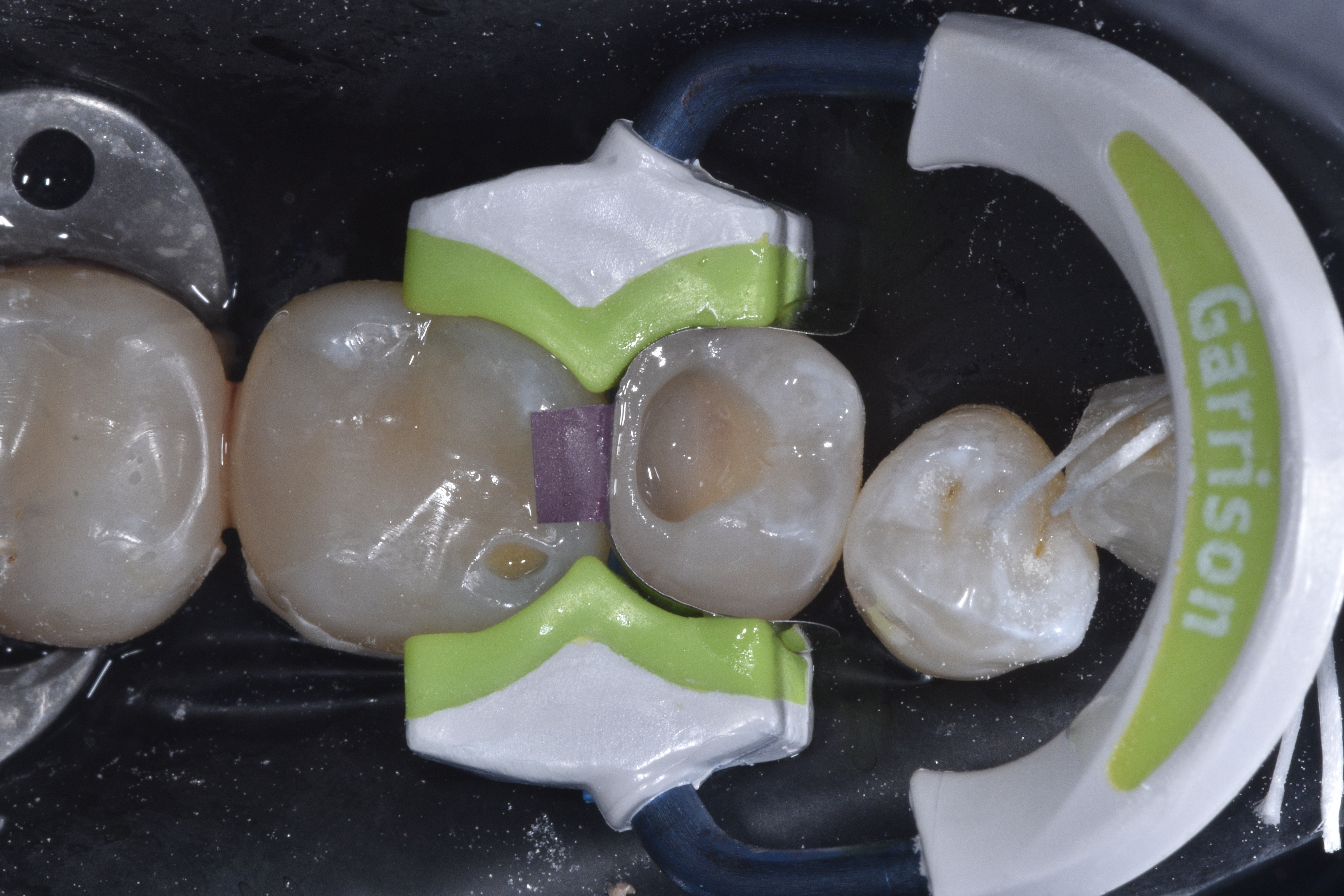
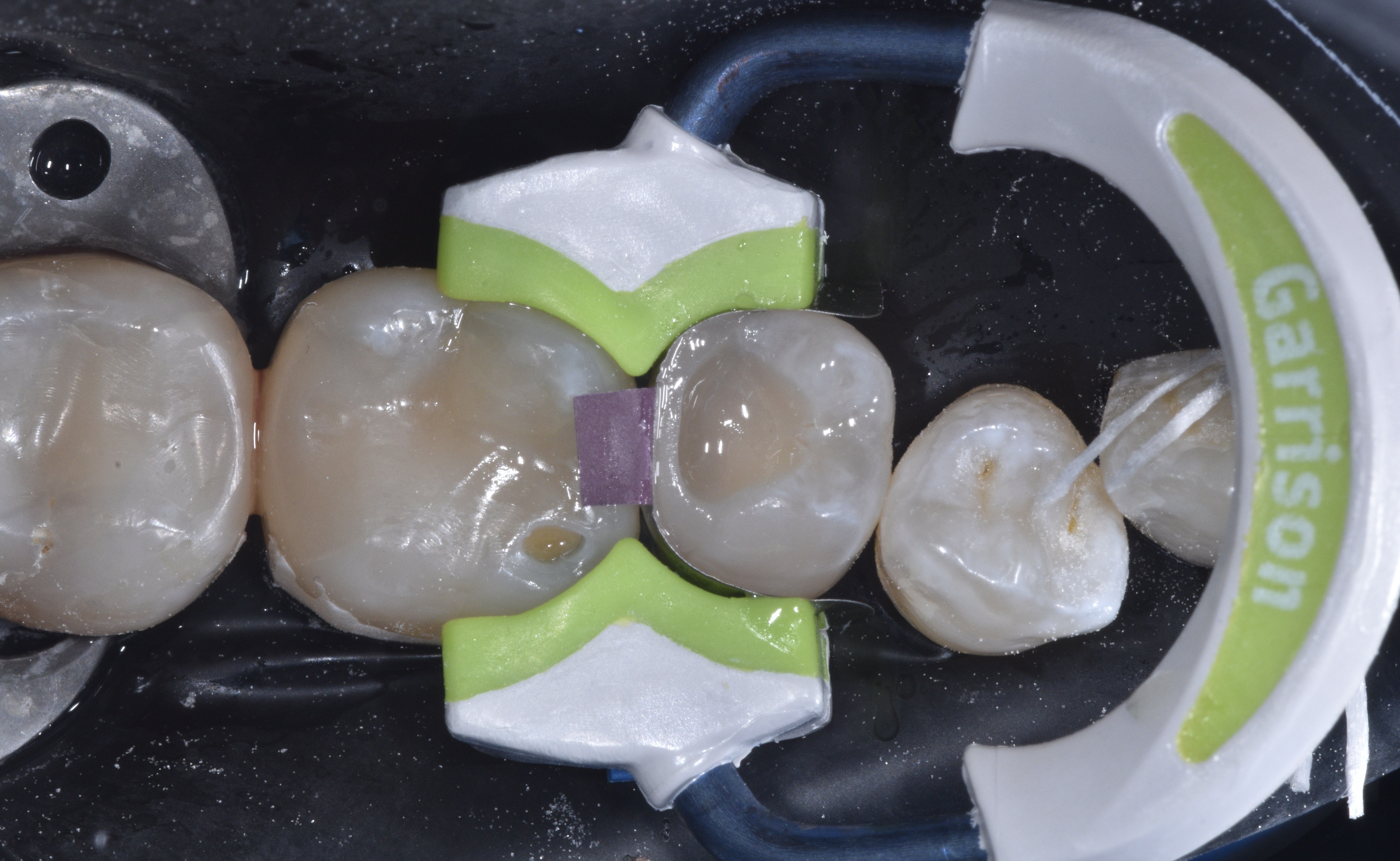
Profound anesthesia was achieved with two carpules of OraBloc Articaine 4% with epinephrine 1:100,000 via inferior alveolar nerve block (IANB). Rubber dam isolation ensured a clean, dry working field. Access to carious lesions was made using a #2 round diamond bur, and clean dentin and peripheral seal zone were established before adhesive steps. The enamel of the proximal box walls and floor was beveled with a fine diamond mosquito bur to improve adaptation of the sectional matrix band and composite material. A small molar purple band, secured by a small blue wedge and adapted with the green wide prep Garrison ring, was positioned (Figure 2). Contouring the band against the mesial wall of the first molar with a Christmas tree composite instrument produced the ideal “C” shape. The prepared surface was air abraded with 23-micron aluminum oxide particles and distilled water using the AquaCare system for optimal adhesion.
|
| Figure 5 shows the hybrid layer after total etch, prime, and bond with OptiBond FL, the gold standard dental adhesive. |
|
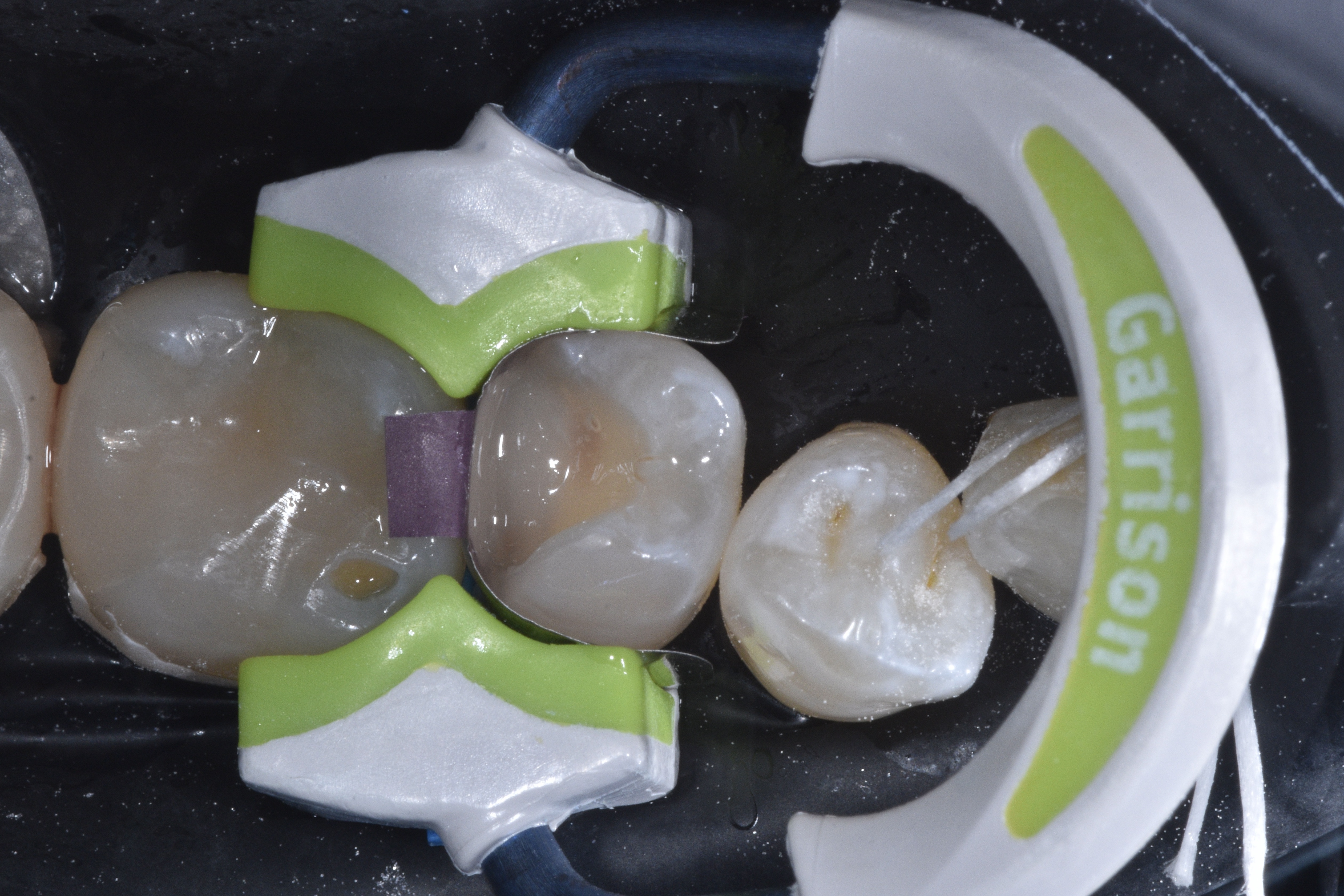
| Figure 6 demonstrates the completion of deep margin elevation (DME) using the "snowplow" technique: a thin layer of flowable composite (Herculite ultra flow-Kerr) is placed on enamel and dentin of the deep margin, followed by a 2mm layer of A2D Harmonize composite (Kerr), and light-cured for 20 seconds. This ensures ideal adaptation and a void-free layer. |
|
| Figure 7 illustrates the centripetal technique for building the proximal wall, completed with a single layer of composite. Careful adaptation to the bottom layer and buccal/lingual walls is essential. |
|
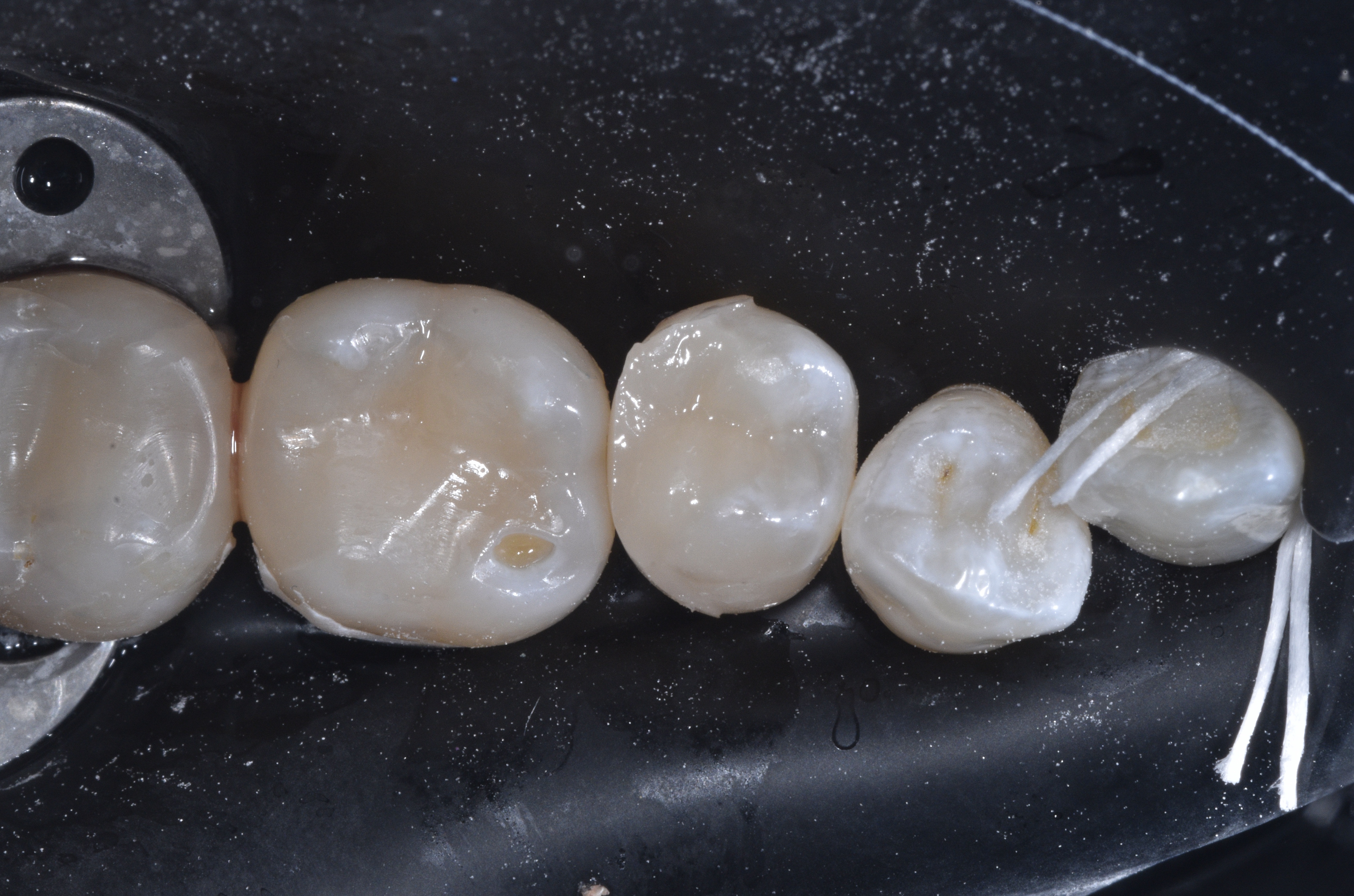
| Figure 8 shows the horizontal composite layer filling the preparation to the DEJ, known as the “dentin replacement.” This case required a single layer, but deeper and larger teeth may need two or three. |
|
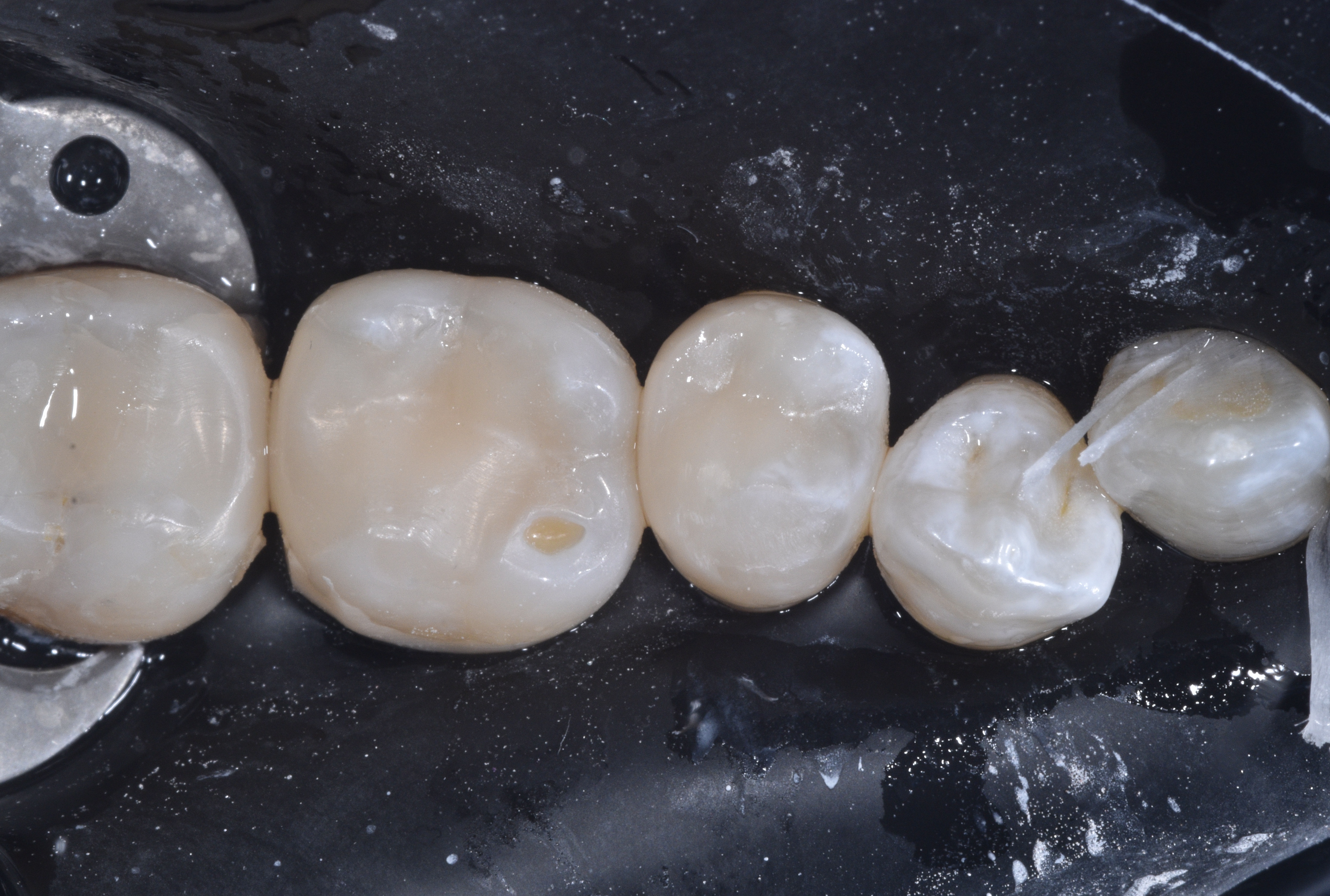
| Figure 9 represents the final two layers using the cusp build-up technique described by Deliperi. These individually placed and cured layers help recreate central fossa and marginal ridge anatomy. |
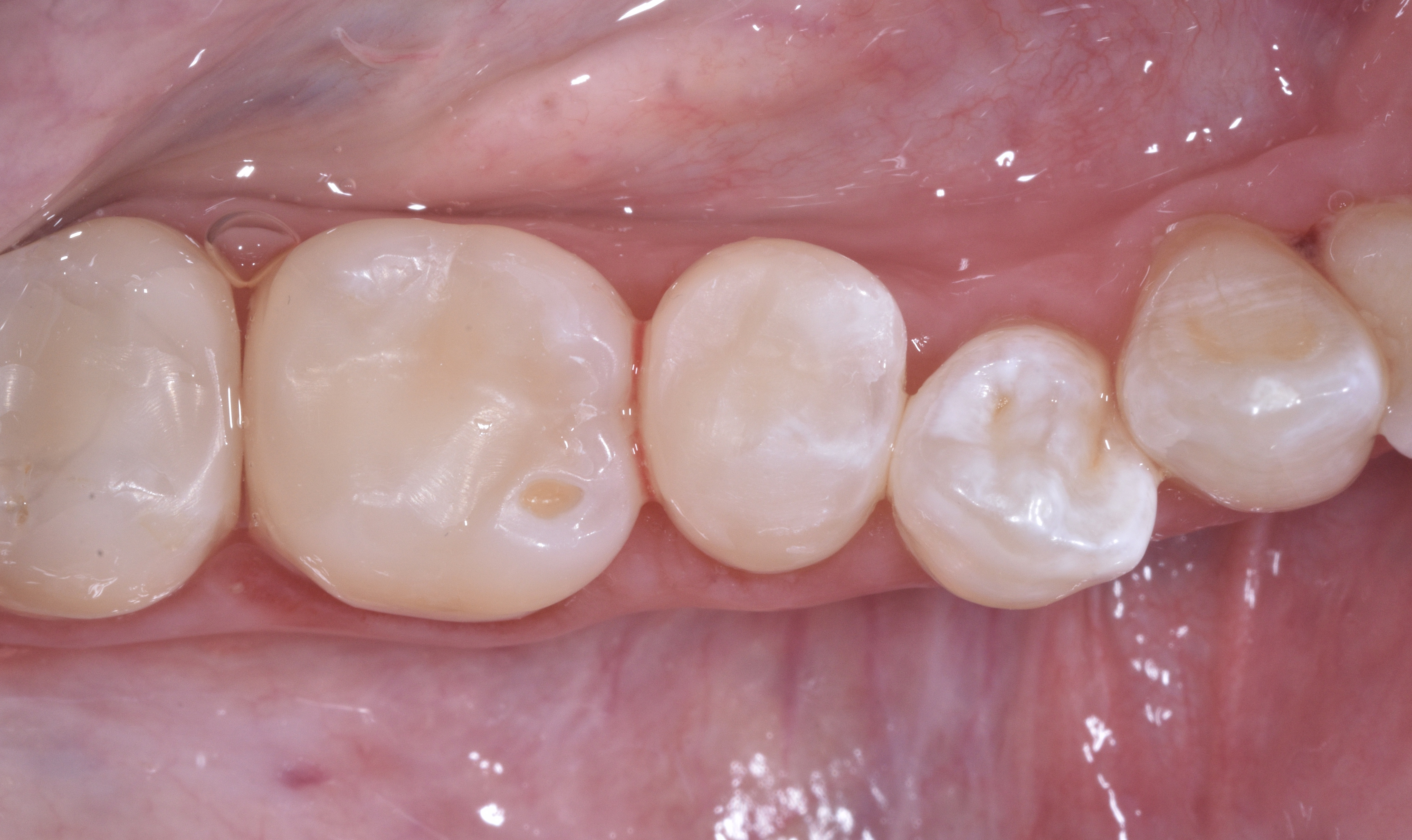
Initial finishing was performed with medium coarse Sof-Lex™ discs to remove excess from buccal, lingual, and occlusal embrasures (Figure 10). Rubber dam removal, occlusal adjustment, and polishing with Enhance points followed (Figure 11).
|
|
| Figure 10. | Figure 11. |
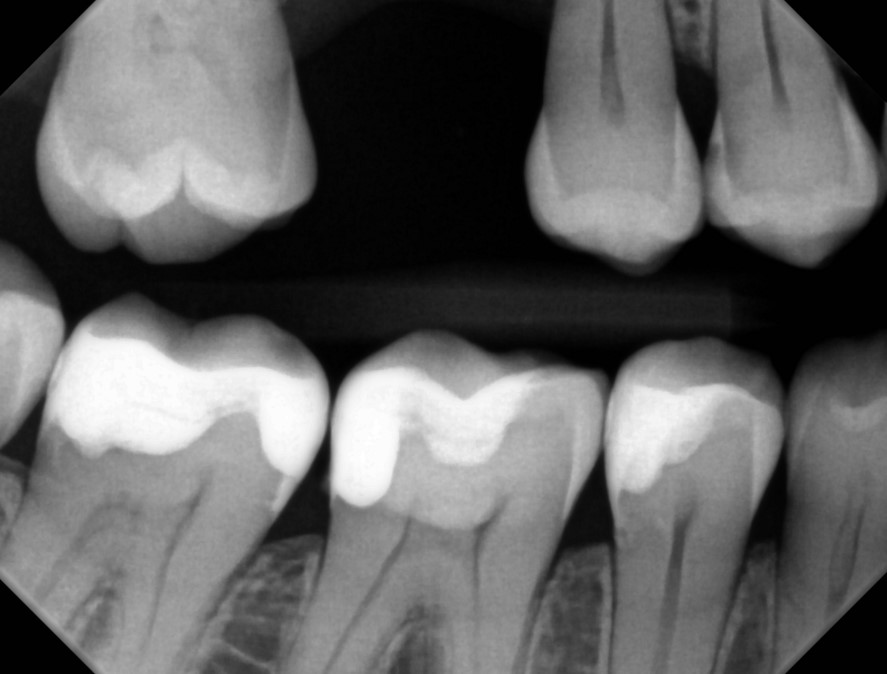
The bitewing (BW) x-ray (Figure 12) confirms the ideal emergence profile and anatomical interproximal contours achieved with the selected matrix system.
|
| Figure 12. |
Summary
The abundance of sectional matrix systems on the market makes selecting the right one challenging for clinicians. There is no universal system; understanding the benefits and limitations of each simplifies the choice. In the author’s experience, the Strata-G matrix system by Garrison meets many requirements for complex Class II restorations.