
The Most Complete Sectional Matrix Band Portfolio in Dentistry
Garrison offers the largest selection of sectional matrix bands available anywhere. Painstakingly crafted in our own production facility in Spring Lake, Michigan, these matrix bands represent the Garrison-driven evolution of sectional matrix systems over the past three decades.
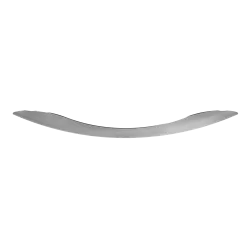
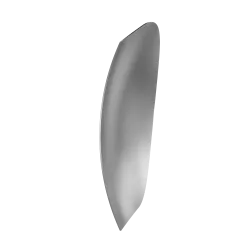
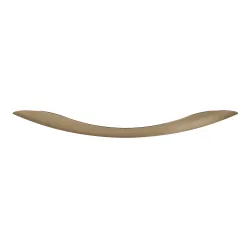
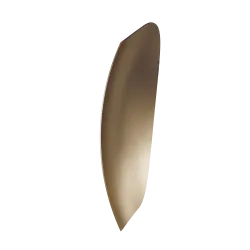
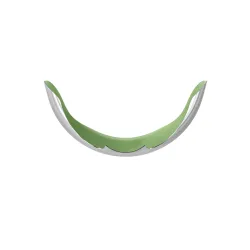
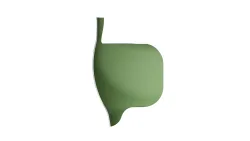
With this huge variety, selecting the correct matrix band is more of a challenge. This chart shows the relevant details of the ‘Standard’ size band from each line of matrices. No two teeth are the same, and optimal results depend on having the right curvature, height, and stiffness chairside.
| Product Line | Part Number | Thickness (including any coating) | Height (gingival to occlusal edge not including any subgingival extension) | Temper | Top-Down View | Cross Section View |
| Original ‘B’ series | B200 | 0.0015” | 6.4mm | Dead-Soft |
|
|
| Gold ‘AU’ series | AU200 | 0.0015” | 6.4mm | Dead-Soft |
|
|
| ‘M’ series | M200 | 0.0015” | 6.4mm | Dead-Soft |
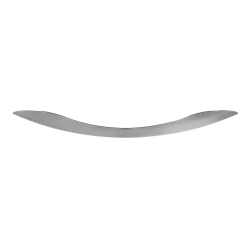
|
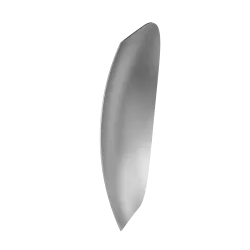
|
| SlickBands | SM200 | 0.0016” | 6.4mm | Dead-Soft |

|
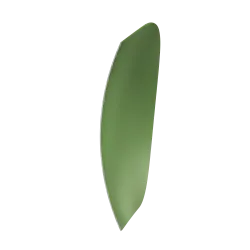
|
| SlickBands ‘XR’ series | SXR200 | 0.0016” | 6.4mm | Dead-Soft |

|
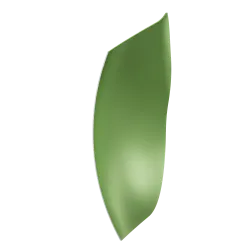
|
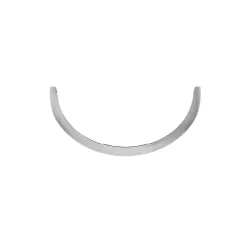
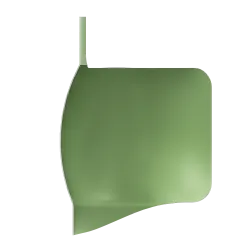
| Fusion Full-Curve | FX200 | 0.0016” | 5.4mm | Dead-Soft |
|
|
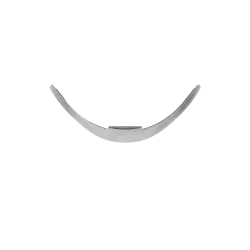
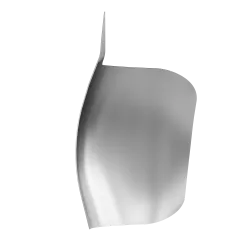
| Firm Bands | FXH200 | 0.0015” | 6.1mm | Firm |
|
|
| Strata-G | SG200 | 0.0016” | 5.0mm | Dead-Soft |
|
|
A tradition of continuous improvement
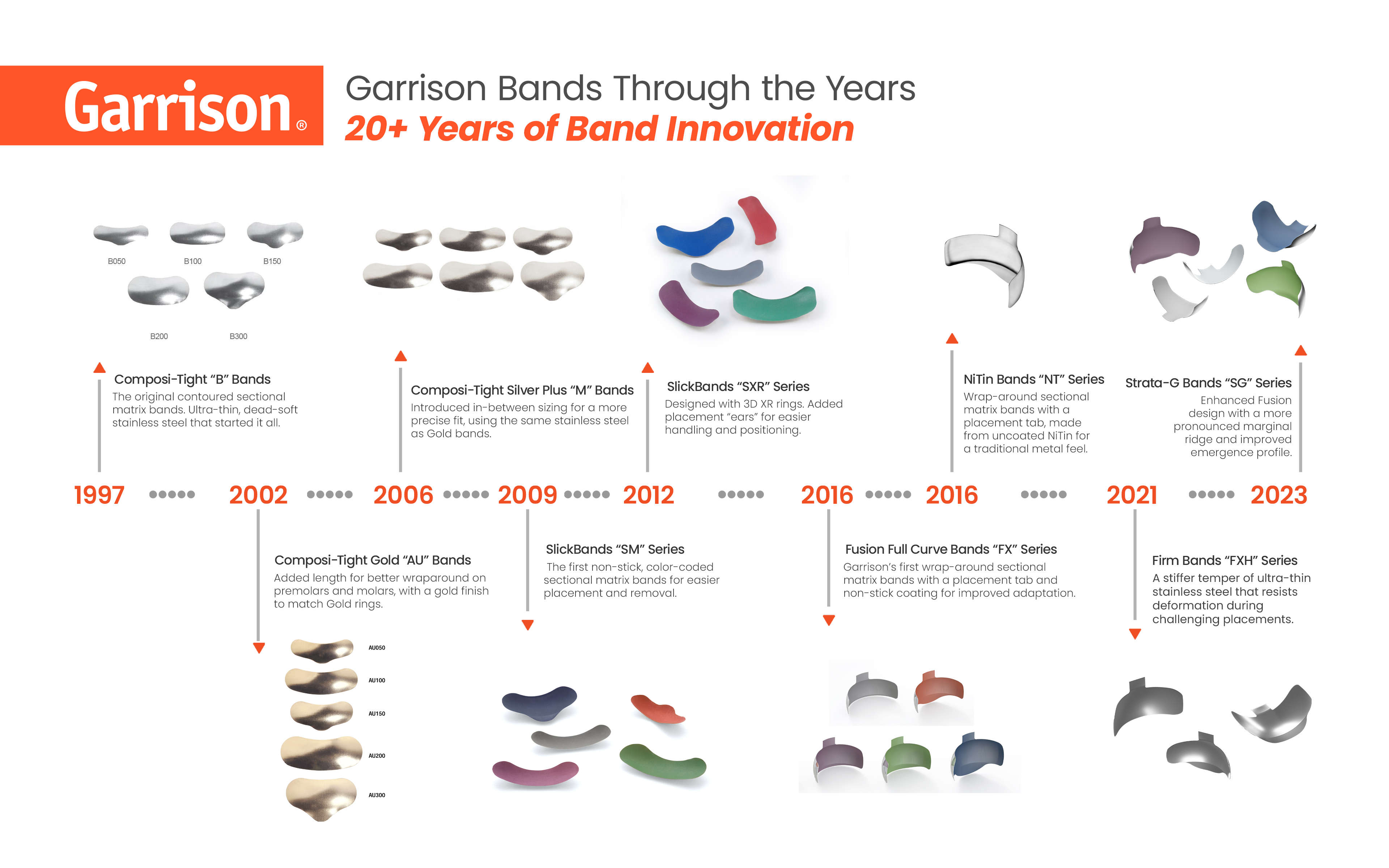
We are frequently asked why we continue to produce some of the original designs when the current state of the art has advanced well beyond that. The answer is very simple. Those designs helped produce excellent contact and contour on Class IIs all those years ago and they still do today. We want to continue to support those clinicians that have built their successful technique around those earlier designs. As long as clinicians continue to rely on them, Garrison will continue to produce them.
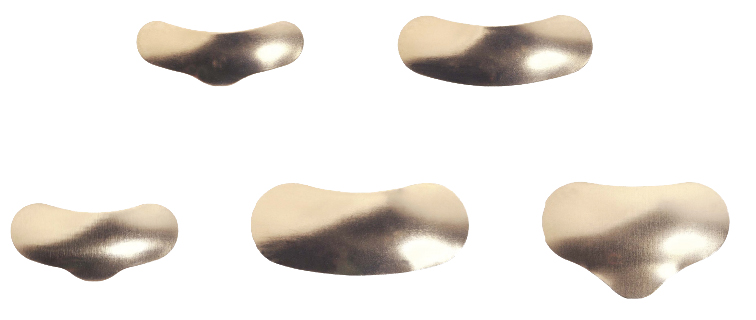
Original ‘B’ Series:
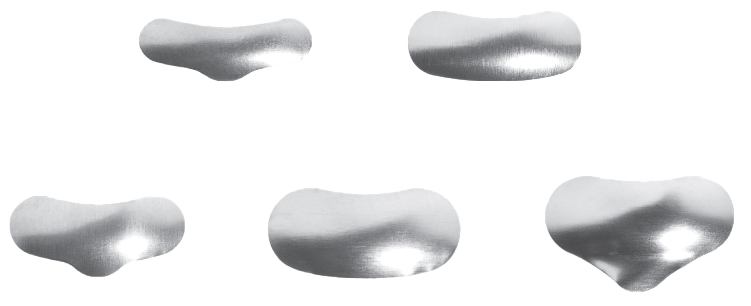
The original matrix bands that started it all! Coupled with the patented burnished and convergent tines that gave the original G-Ring its (something about starting an entire industry) ability to grip teeth and separate teeth, the original B series solved the final hurdle holding back posterior Class II composites – getting a tight, anatomically accurate contact. They launched Garrison Dental Solutions and a true worldwide revolution for dentistry. Still a popular choice nearly 30 years after launching, the timeless design of the original B bands have helped clinicians restore 100’s of millions of teeth.
Gold ‘AU’ Series:
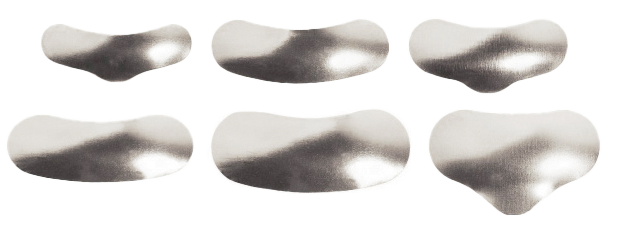
Introduced as part of the Composi-Tight Gold Sectional Matrix System in 2002, the only notable change from the B series was not in fact their gold coloration. It was the added lingual/buccal length that allows them to wrap further around the tooth for wider preparations. This change came directly from clinicians’ requests. Gold bands are made from the exact same material and follow the same gingival/occlusal curvature as the original B bands. The gold color? Simply a cosmetic treatment that allowed them to match the color of the new Composi-Tight Gold separator rings.
‘M’ Series:
When the Composi-Tight Silver Plus Sectional Matrix System was introduced, the ‘M’ series matrix bands followed the Gold series by incorporating a specific clinician request. They wanted a size ½ way between the existing molar size and premolar/bicuspid size. The new M175 size filled that need. Other than that, the only difference between the Gold series and M series is that we went back to the plain un-cosmetically colored standard stainless steel. Yes, other than the M175 and no color, M series bands are identical in every way to the Gold bands.
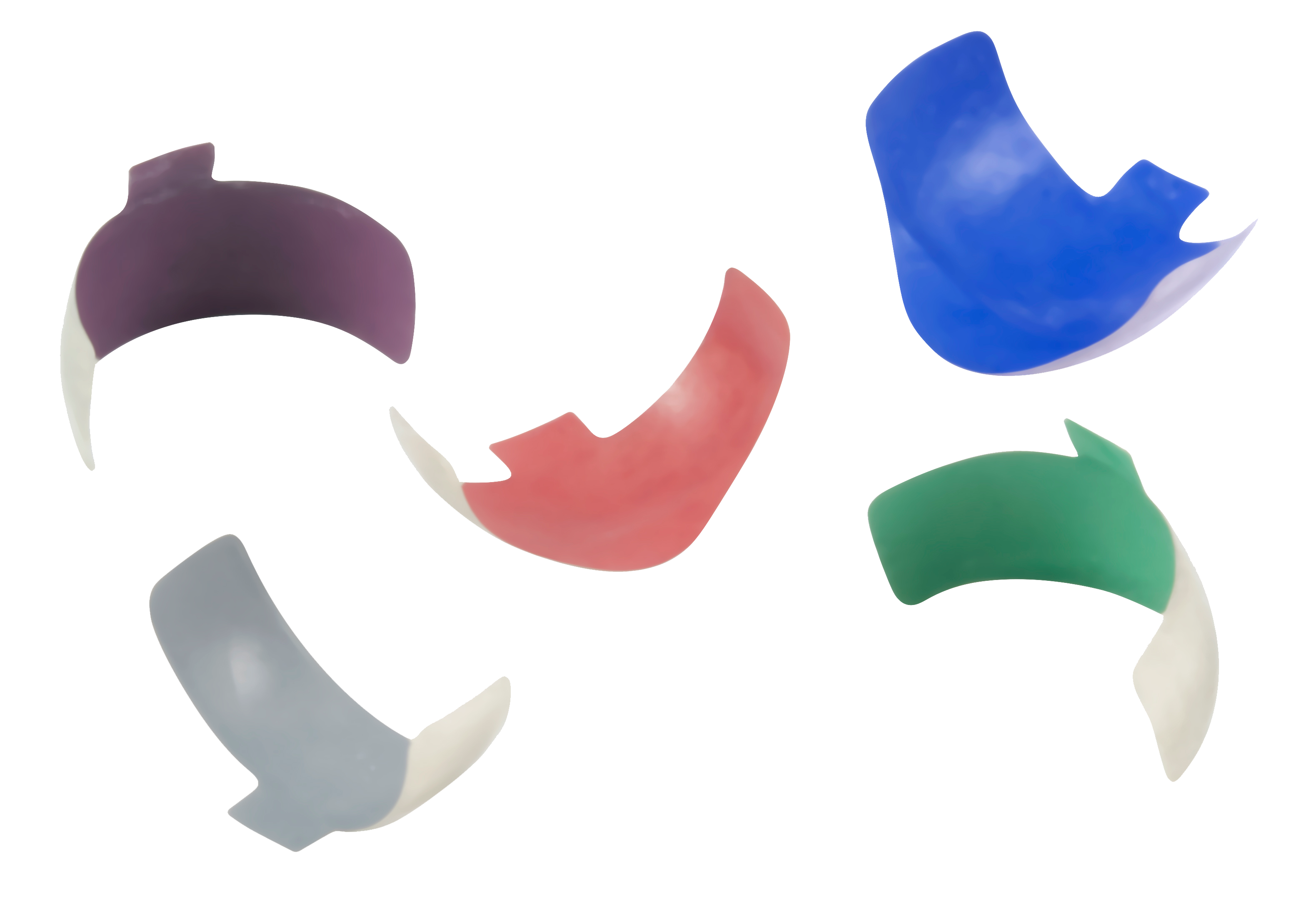
SlickBands:
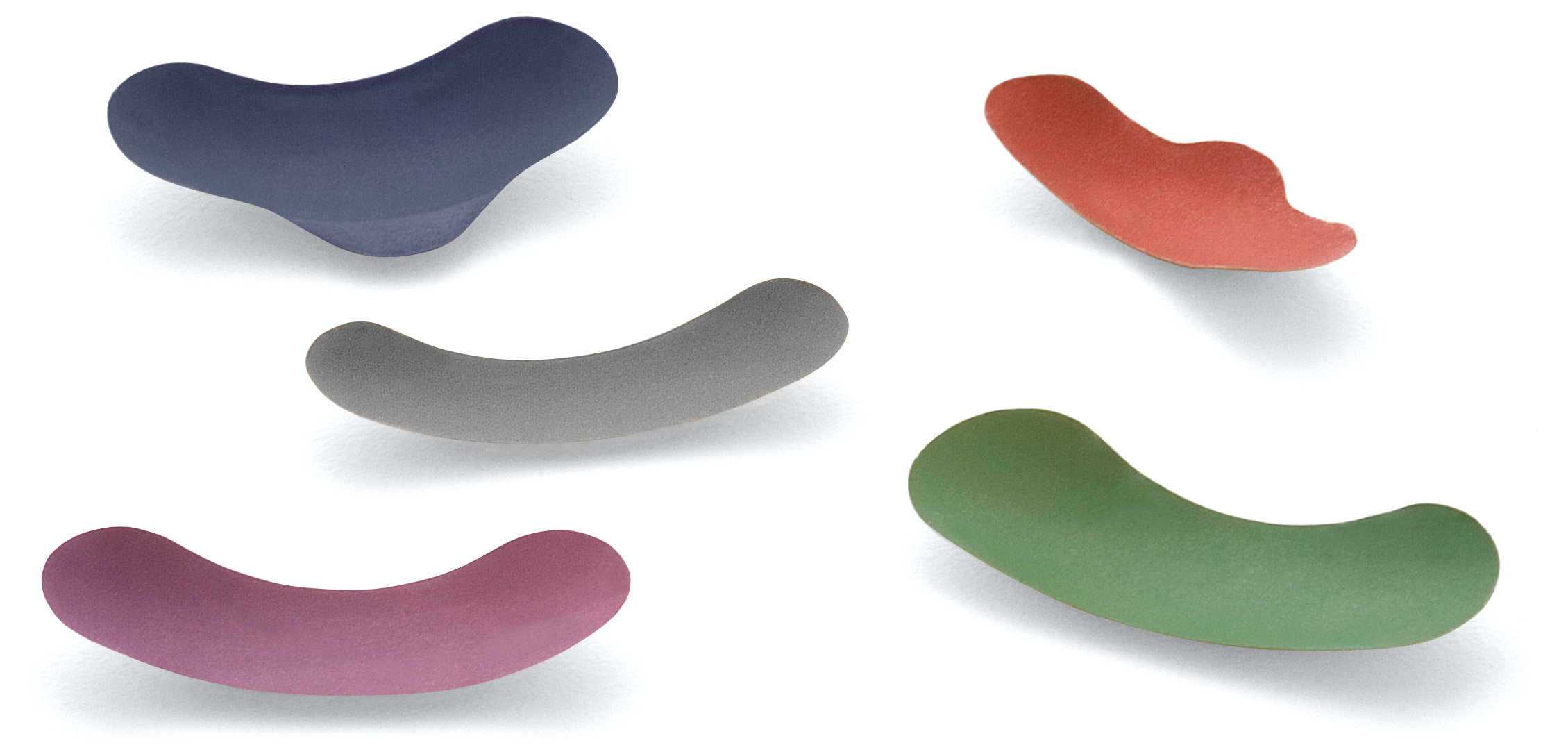
SlickBands represent two more Garrison industry firsts:
- They are the first matrix bands to have a non-stick coating
- The first to be color coded for instant identification.
Shape-wise they follow the exact same profiles of the Gold and M series, but their base material is slightly different. SlickBands do not use the 0.0015” stainless steel as their predecessors but rather a slightly thinner metal so that when the micro-thin non-stick coating is applied, they are still thin enough not to interfere with the creation of tight interproximal contacts. The non-stick coating is truly beneficial when removing ultra-thin bands from tight contacts with tearing and the color coding has saved countless incorrectly ordered matrix bands!
SXR Series:
When the Composi-Tight 3DXR matrix bands were introduced, we were helping clinicians answer two questions that have been plaguing sectional matrix users since sectional bands were first invented:
- Which side of the band is ‘up’ (goes towards the occlusal margin of the tooth)
- Where to grab them so the marginal ridge of the band does not get distorted.
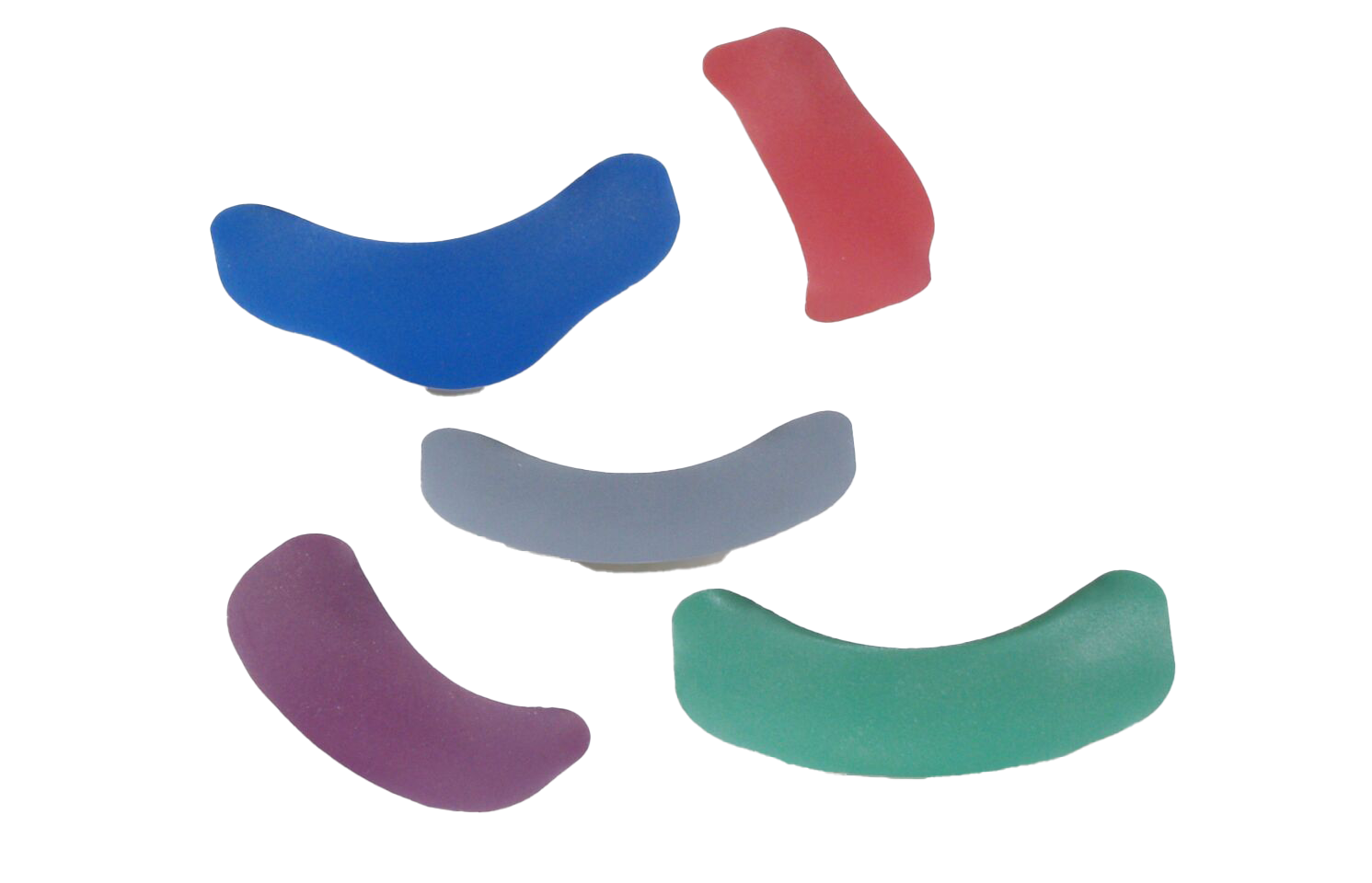
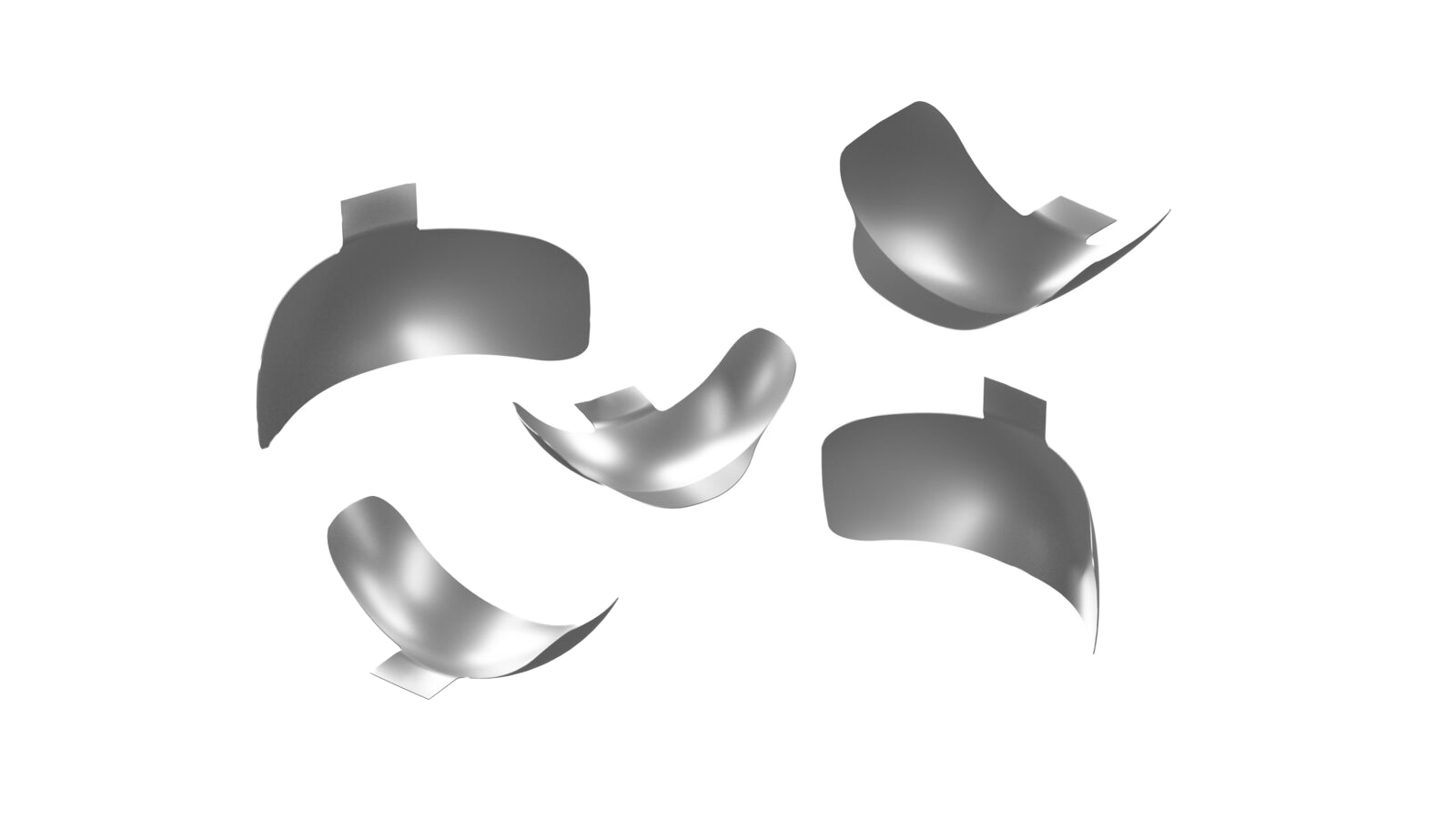
The little ‘mouse ears’ on the SXR bands represent the perfect place to grip the band for placement and clearly mark the occlusal edge of the band. Other than those additions, SXR bands are identical to the original SlickBands.
Fusion Full-Curve:
Fusion Full-Curve bands, again inspired by clinician requests, work intimately with the Fusion system’s three unique separator ring designs to bring great versatility and improved patient outcomes. Gingival/occlusal contours were improved to better restore emergence profiles while their wrap around design facilitated the restoration of ultra-wide Class II’s in concert with the Fusion’s green Wide-Prep ring – the first of it’s kind. Superb band to tooth seal and enhanced anatomy means less trimming and finished taking some of the tedium out of creating excellent Class II restorations.
Firm Bands:
Firm Bands definitively solve one of sectional matrix uses most frustrating problems: Ultra-thin dead-soft matrix bands crushing or deforming during placement. Still ultra-thin at only 0.0015”, Firm Bands use a special temper of stainless steel. This allows us to still form them to mimic natural anatomy although the process is more complicated, but the result is a matrix band that holds its shape even in difficult placement scenarios. Ideal for back-to-back Class IIs and many other situations, Firm Bands are a true problem solver.

Strata-G:
Strata-G matrix bands incorporate a few adjustments to overall geometry in the ongoing drive towards the ‘perfect’ matrix band. You can see by the gingival/occlusal height listed, Strata-G is slightly shorter than Fusion Full-Curve bands. More difficult to see are the modification to the gingival/occlusal curvature and emergence profile. The body of Strata-G is slightly more bulbous which allows them to better conform and reproduce interproximal anatomy on similarly shaped teeth. Teeth have such a marvelous variety of configurations – your matrix bands need to follow suite!
Matrix Band FAQ’s
Q: What is the difference between the types of bands you sell?
A: Each series of sectional matrix bands represents an evolutionary step towards ‘the perfect matrix band’. We haven’t found the perfect combination of features yet, but suggestions from clinicians is what drives our continued improvement efforts. Please review the chart and details above for the specific differences.
Q: Are the bands universal between different product lines and manufacturers?
A: All Garrison matrix bands as well as all other brands we’re aware of can be used interchangeably. This does NOT mean that they are all the same! Each Garrison product line and each sectional matrix band manufacturer has their own combination of size, curvature, thickness, and temper.
Q: Why are some colored and others not?
A: The coloring on some of the matrix bands performs two functions. The first being easy identification between the various sizes, the other and more important function is that the coloring is a micro-thin non-stick coating. The non-stick coating can make matrix band removal from a very tight Class II restoration much easier. We make both versions to give you the option of selecting a series of matrix bands the best suits your personal preference.
Q: Why don’t you have a hole in your band?
A: This is a great question! In our extensive research both in formal surveys and simple discussions with clinicians all over the world, only a small percentage of those that purchase bands with the holes actually use the specialized ‘pin-tweezers’ that are required to work with them.
Q: How do I get the band in when I haven’t broken contact?
A: There are a couple of ways to help with this.
- Pre-wedging. Place a wedge before you start to prep. Once your prep is complete, remove the wedge and the resulting tooth separation may be adequate for you to place the band. A regular wedge can be used for this or for the added benefit of protecting the adjacent tooth from inadvertent bur contact, place a FenderWedge to both pre-separate and protect.
- Use a Firm Band (see above). While still super thin at only 0.0015” thick, Firm Bands are made from a stiffer temper of stainless steel. They resist deformation very well and make band placement in difficult situations much easier. Firm Bands are also excellent for back-to-back Class IIs.
Q: How do I keep the matrix bands from moving around during wedge or ring placment?
A: Keep firm apical finger pressure on the matrix band during wedge placement. This will prevent the band from ‘popping up’ or being pushed through the interproximal space. This in turn will help ensure that the cervical portion of the matrix band is firmly engaged against the tooth by the wedge. This helps prevent band displacement during ring placement. Inadvertent contact between the ring tips and the band ends is another one of the causes of band dislodgement. Before moving the ring in for placement. use your fingers to pinch the ends of the matrix band against the buccal and lingual surfaces of the tooth getting them further away from where you are placing the ring.
Q: What side goes up on the ‘kidney-shaped’ bands?
A: Traditionally shaped or ‘kidney bean’ shaped matrix bands should be place with their concave edge to the occlusal margin – Smily side up😊 If place upside down, the concave edge may not extend deep enough past the cervical margin of the preparation increasing the likelihood of an improper cervical seal. The possibility of leakage, contamination, and overhangs will be increased by incorrect placement.