FREE SHIPPING on orders over $475
FREE SHIPPING on orders over $475 | No Code Needed
Login to see prices and product availability.


*Login to see prices and product availability.
Login to see prices and product availability.
Login to see prices and product availability.
Login to see prices and product availability.
Login to see prices and product availability.
Login to see prices and product availability.
Login to see prices and product availability.
Login to see prices and product availability.
Login to see prices and product availability.
Total: $0.00
*Login to see prices and product availability.

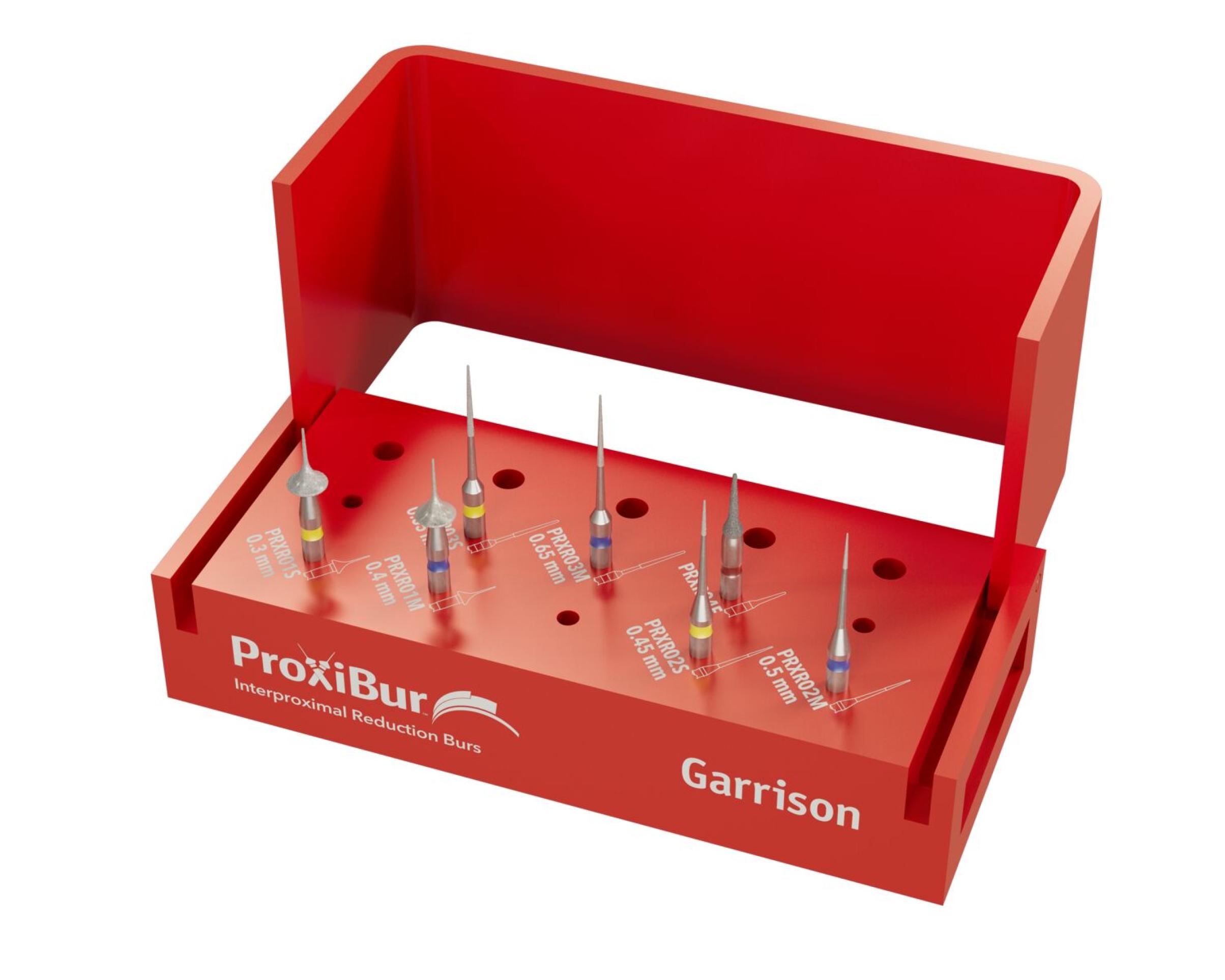
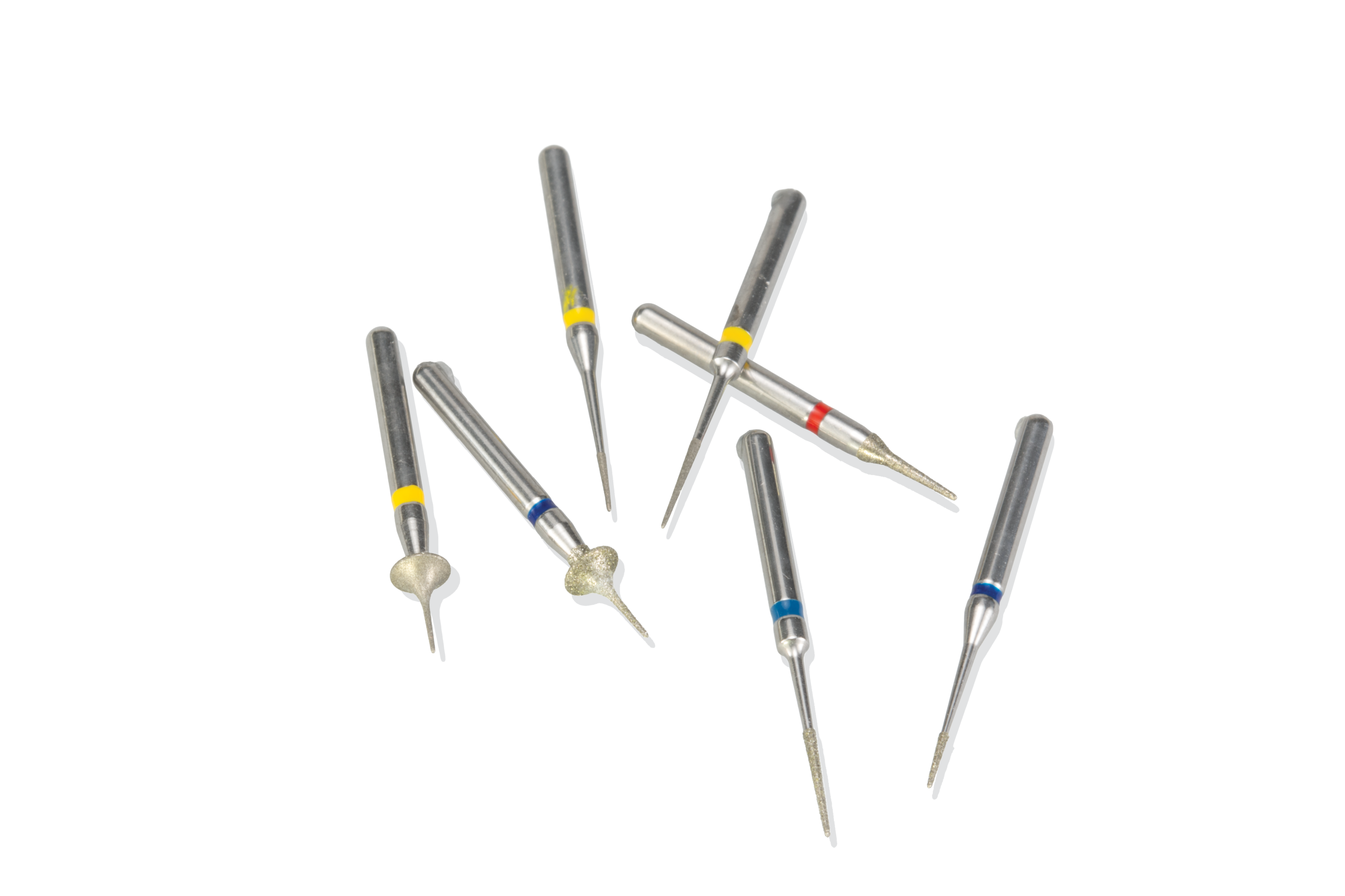
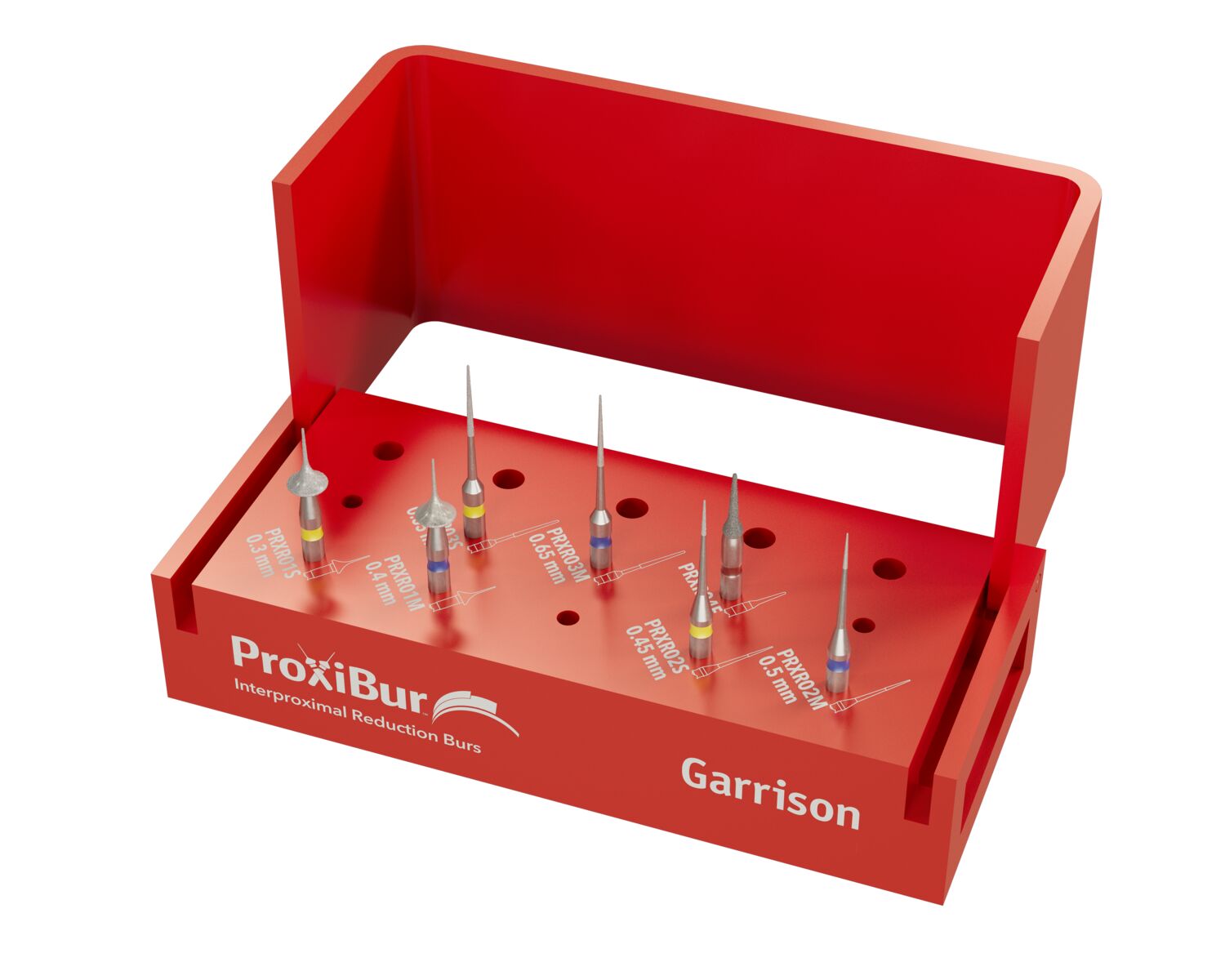
ProxiBurs™ are purpose-built interproximal reduction (IPR) reusable diamond burs engineered to bring consistency, efficiency, and control to enamel reduction. Designed specifically for interproximal reduction, ProxiBurs™ enable clinicians to perform predictable, repeatable IPR as part of a modern, standardized workflow when combined with FitStrips™. To maximize ProxiBurs™ useful life (4-6 uses), use ample waterflow with burs to reduce friction / heat generation.
Predictable Reduction
Engineered shapes and calibrated thicknesses support controlled enamel removal, improving procedural accuracy and repeatability.
Enhanced Efficiency
Clinicians report meaningful time savings during procedures, enabling faster case completion without compromising control.
Smooth Cutting Performance
Designed for consistent cutting feel and improved handling in tight interproximal spaces.
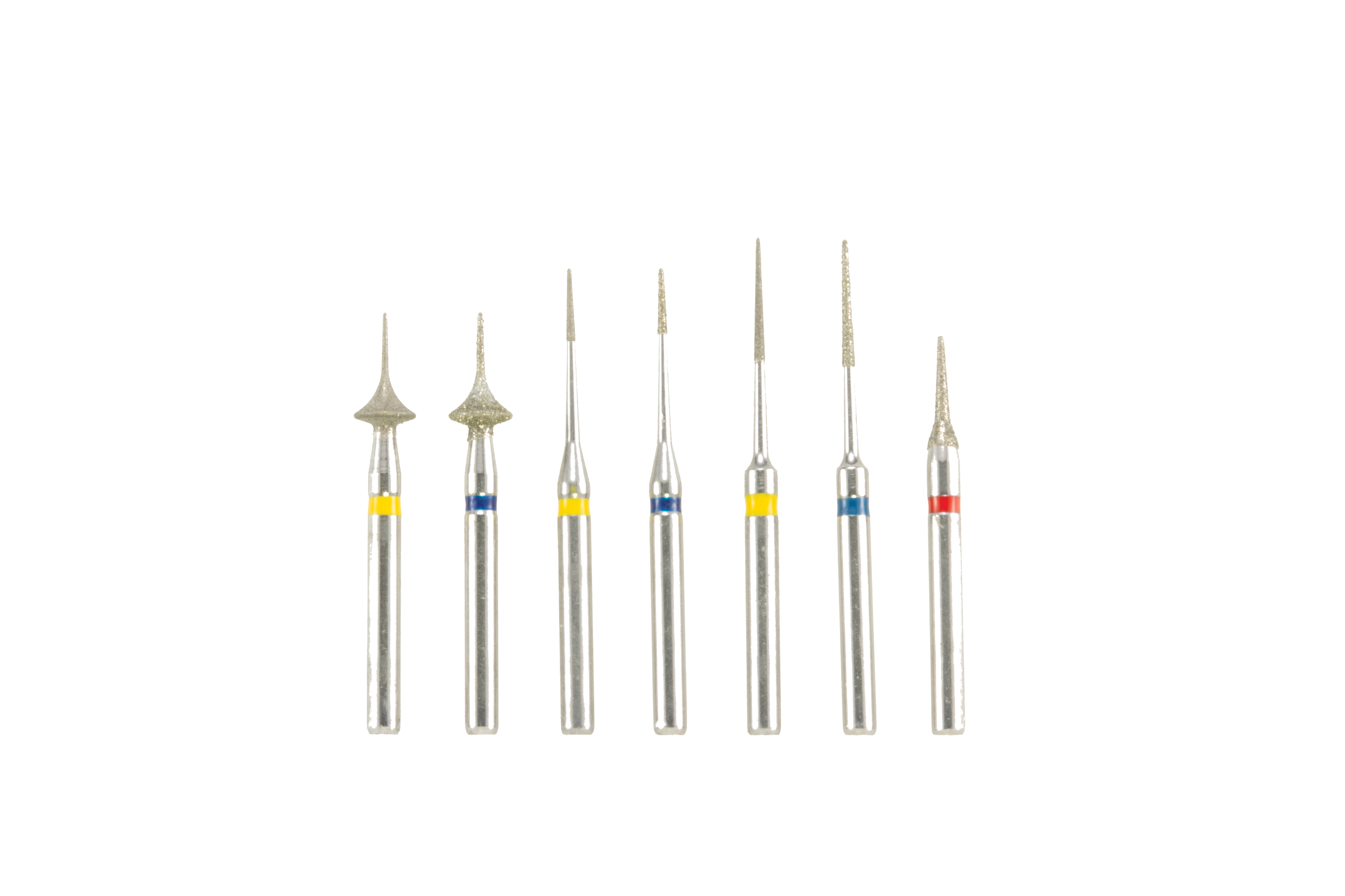
| Refill SKU | Image | Thickness of Reduction (mm) | Where Used | Grit | Description | Max RPM |
| PRXR01S |
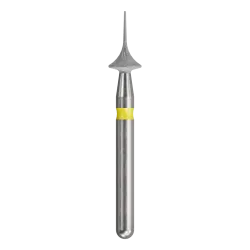
| 0.30 | Anterior | Super Fine | 4 burs/pk 0.30mm minimal reduction burs | 450,000 |
| PRXR01M |
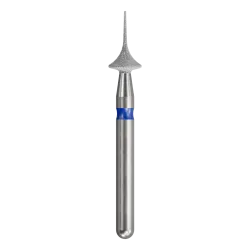
| 0.40 | Anterior | Medium | 4 burs/pk 0.40mm light reduction burs | 450,000 |
| PRXR02S |
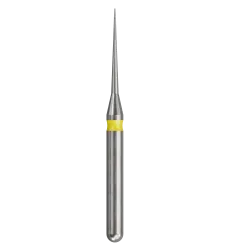
| 0.20 - 0.45 | Posterior | Super Fine | 4 burs/pk 0.45mm moderate reduction burs | 450,000 |
| PRXR02M |
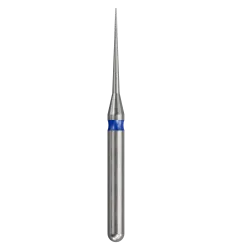
| 0.30 - 0.50 | Posterior | Medium | 4 burs/pk 0.50mm moderate-heavy reduction burs | 450,000 |
| PRXR03S |
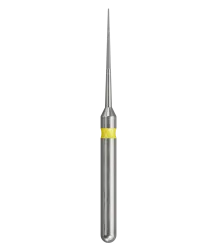
| 0.20 - 0.55 | Posterior | Super Fine | 4 burs/pk 0.55mm advanced reduction burs | 450,000 |
| PRXR03M |
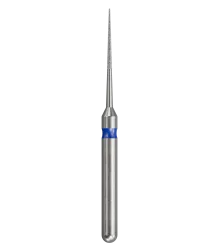
| 0.30 - 0.65 | Posterior | Medium | 4 burs/pk 0.65mm maximum reduction burs | 450,000 |
| PRXR04F |
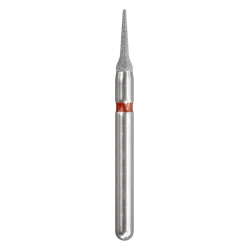
| Fine | 4 burs/pk general interproximal smooth & recontouring diamond burs | 300,000 |
This shape maintains a constant thickness across its diameter, enabling consistent enamel reduction. It is engineered for anterior IPR and recontouring, with a cone-shaped tip designed to refine tooth contours following interproximal reduction with the tip.
PRXR01S
PRXR01M
This shape features a tapered thickness across its diameter for controlled, progressive enamel reduction. As you move along its diameter further from the handpiece, the bur becomes thinner. Positioned between PRXR01 and PRXR03, it offers a balanced abrasive profile, making it ideal for IPR in the 0.2mm to 0.5mm range.
PRXR02S
PRXR02M
Like PRXR02, this shape features a tapered thickness across its diameter, with a longer abrasive portion for extended working length compared to PRXR02. It is optimized for gingival-to-occlusal (vertical) IPR and represents the thickest option among the three ProxiBur™ IPR shapes.
PRXR03S
PRXR03M
This ProxiBur™ is designed for general finishing and contouring following IPR, delivering smooth, refined enamel surfaces. It can be used as a standalone finishing solution or in place of FitStrips™ when needed. This bur is not designed for IPR.
ProxiBurs™ are designed to work seamlessly with finishing strips in a two-step IPR process:
This integrated approach creates a comprehensive solution that improves both clinical outcomes and workflow consistency.
Q: Why would I buy ProxiBurs if I already have FitStrips?
A: Burs: faster, more efficient, will save you time during IPR Strips: more controlled, ideal for finishing post ProxiBur use or for small IPR (<0.3mm) requirements.
Q: Are burs or strips more accurate?
A: Studies show diamond burs are more accurate than strips for achieving planned IPR amounts, with smaller deviations from target reduction.
Q: Why do clinicians often underperform planned IPR?
A: Research shows clinicians tend to be more conservative to avoid over-reduction. They also tend to remove less enamel than planned, especially with strips.
Q: Could I use ProxiBurs for something other than IPR?
A: ProxiBurs are designed specifically for IPR rather than repurposed general diamond burs. That said, some clinicians have indicated that ProxiBurs work well for composite veneer / injection molding cases.
Q: How are ProxiBurs different from standard diamond burs I own?
A: ProxiBurs have calibrated working thicknesses for measurable IPR. They are designed specifically for enamel slenderization and have improved control compared to general purpose diamond burs.
Q: When should I use ProxiBurs over FitStrips for IPR?
A: When planned reduction is >= 0.30mm and you want efficient, predictable, accurate, gross enamel reduction.
Q: When should I use FitStrips over ProxiBurs for IPR?
A: When planned reduction is <= 0.30mm and for finishing / smoothing after >= 0.3mm IPR with ProxiBurs.
Q: Are ProxiBurs difficult to learn?
A: No. IPR ProxiBurs integrate into existing workflows and are intuitive for clinicians who are already performing IPR, especially those familiar with high-speed handpieces.
Q: Is there a recommended motion technique (e.g., occlusogingival vs. buccolingual strokes) to avoid creating enamel ledges, given that ledging is an intrinsic risk in mechanical IPR?
A: Make sure to perform IPR parallel to the long axis of the tooth and to perform gentle occlusogingival stroke motions. If there is severe crowding and you try and perform the requested IPR in one motion / stroke, it is easy to build friction and create ledges.
Q: For tapered burs (PRXR02 and PRXR03) with decreasing thickness towards the tip (e.g., 0.20–0.45 mm or 0.20–0.55 mm), how can the clinician accurately control the exact thickness inserted into the interproximal space? How do we prevent over-reduction if the bur penetrates further vertically?
A: The function of the tapered thicknesses is so that you can use the thinner portions to open up the contact and begin to perform IPR. If you use the stroke motion and move towards the base (e.g. thicker portion of the bur), you will get the desired IPR and can check with the gauge. An alternative method (let's say you need 0.55mm), is to use the 0.55mm ProxiBur, get it as close as possible to 0.55mm of IPR, and then use a FitStrip to get you to the finish line.
Q: In which specific clinical scenarios is it preferable to use constant-thickness parallel burs (PRXR01S/M) over tapered burs in the anterior region?
A: Clinician preference. Anything in the 0.3 / 0.4mm range, the PRXR01S/M is likely easier to use than the PRXR02 and PRXR03. That said, we've had multiple dentists indicate that they like the occlusogingival IPR (e.g. PRXR02 and PRXR03 burs) better.
Q: How should clinicians objectively evaluate diamond wear to discard the bur before friction causes excessive heat?
A: When it requires noticeably more pressure to cut effectively. The diamond abrasive should make it easy to perform IPR. When it becomes more difficult, it is time to replace the bur.
Q: In cases of severe crowding where contact points are non-parallel, should clinicians always break the contact first using a serrated saw or yellow FitStrip before introducing a ProxiBur, or can the fine tip of the PRXR02S or PRXR03S enter directly without creating notches?
A: While we'd recommend opening the contact with the serrated saw and yellow FitStrip, the design function of the tapered thickness of PRXR02 and PRXR03 is to open the contact with the thin tip, so it's ultimately your choice.